6. The National Holocaust Museum: Digital Storytelling for Historical Preservation

Section 1. Introduction

1.1. General Information

Name of the Initiative: National Holocaust Museum
Location: Amsterdam, the Netherlands
Promoter name: Jewish Historical Quarter Foundation
Type of entity: Museum
Ownership: Private

Contact and Communication Details:

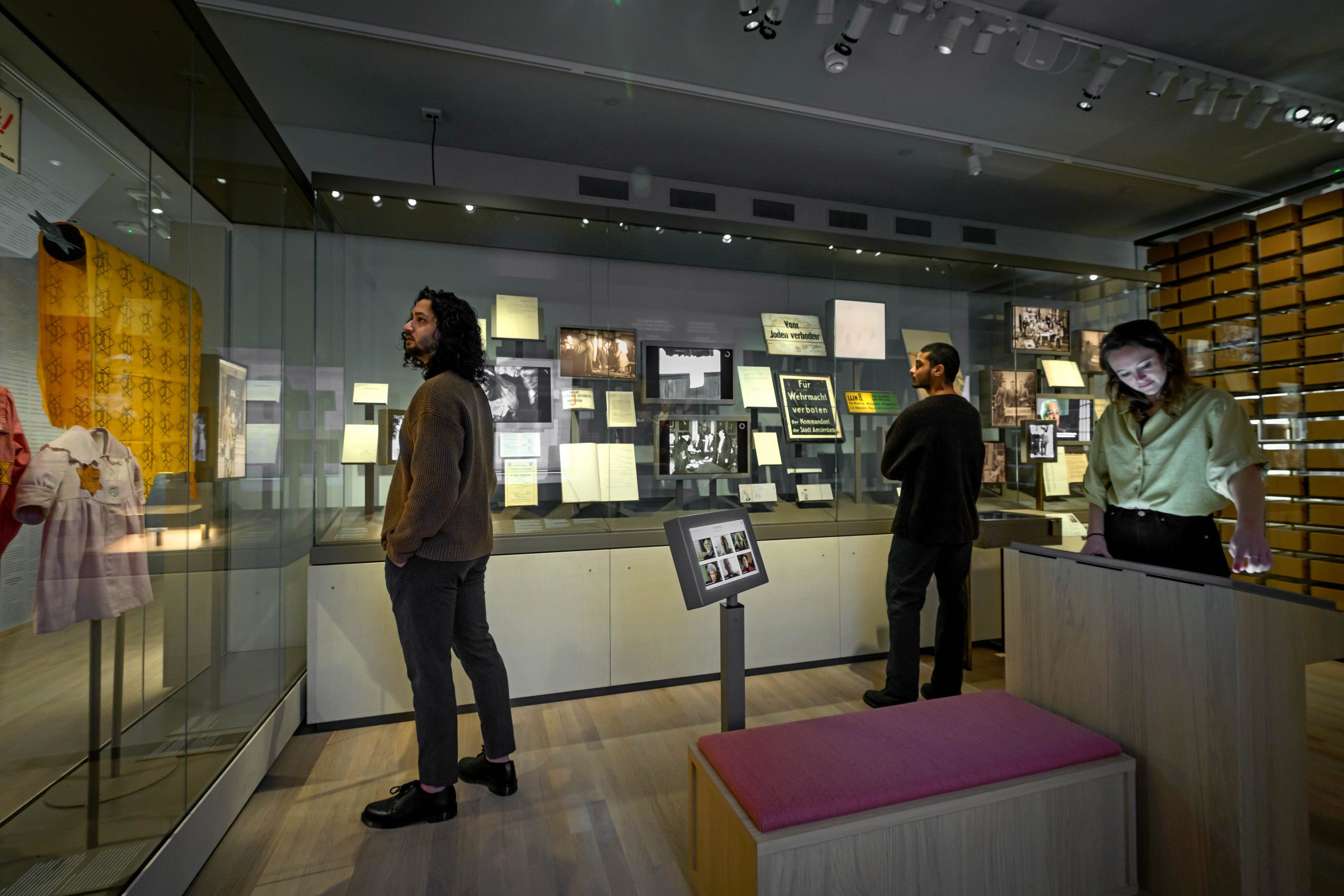
The National Holocaust Museum, part of the Jewish Cultural Quarter Fundation in Amsterdam alongside the Jewish Museum, the Portuguese Synagogue, and the Hollandsche Schouwburg, opened in March 2024. It is dedicated to telling the story of the Holocaust, during which approximately 107,000 of the 140,000 Jews in the Netherlands were deported, with only 5,200 surviving. The museum is housed in a former nursery that, from October 1942, served as an annex to the Hollandsche Schouwburg where Jewish children awaited deportation separately from their parents.

The museum provides a comprehensive narrative of the Nazi persecution and murder of Jews in the Netherlands. It is the first museum to cover the history of Jewish persecution across the entire country. The exhibitions explore the daily life of Jews before and during World War II, the liberation, and the post-war culture of remembrance.

The National Holocaust Museum employs digital storytelling to powerfully convey the history of the Holocaust. This technique is combined with physical exhibits such as photos, utilitarian objects, letters, and clothing. Digital storytelling adds personal narratives to these objects, making the information more compelling and memorable for visitors.

The use of personal stories linked to specific objects or events helps visitors form a deeper connection with the exhibits. This method of combining digital media with tangible artifacts provides a model for other cultural heritage initiatives, demonstrating how personal narratives can enhance the impact and retention of historical information.
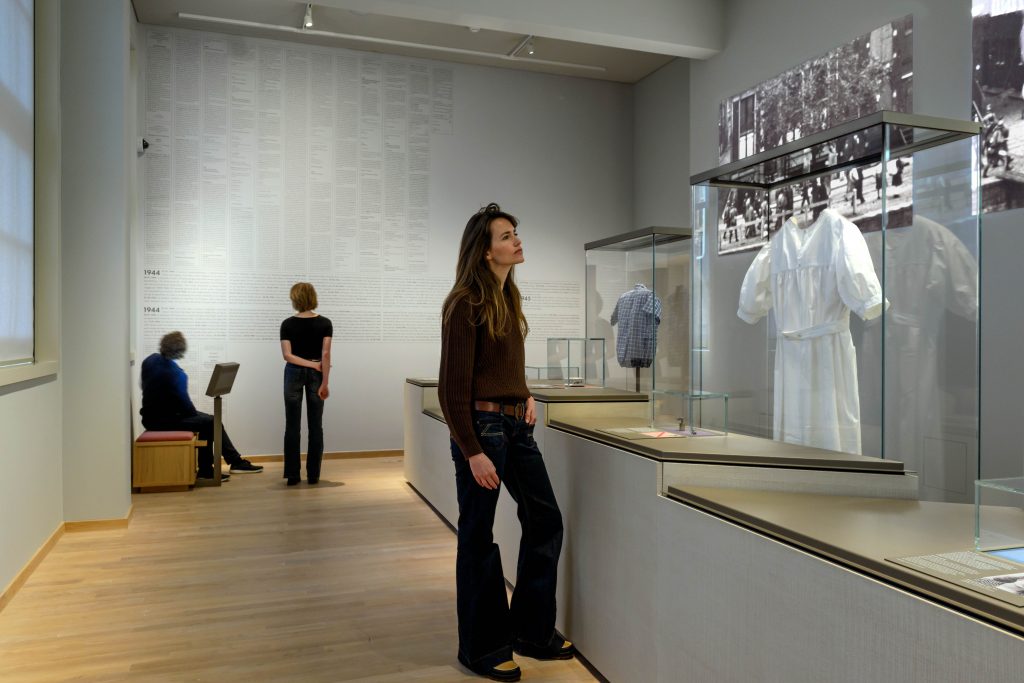
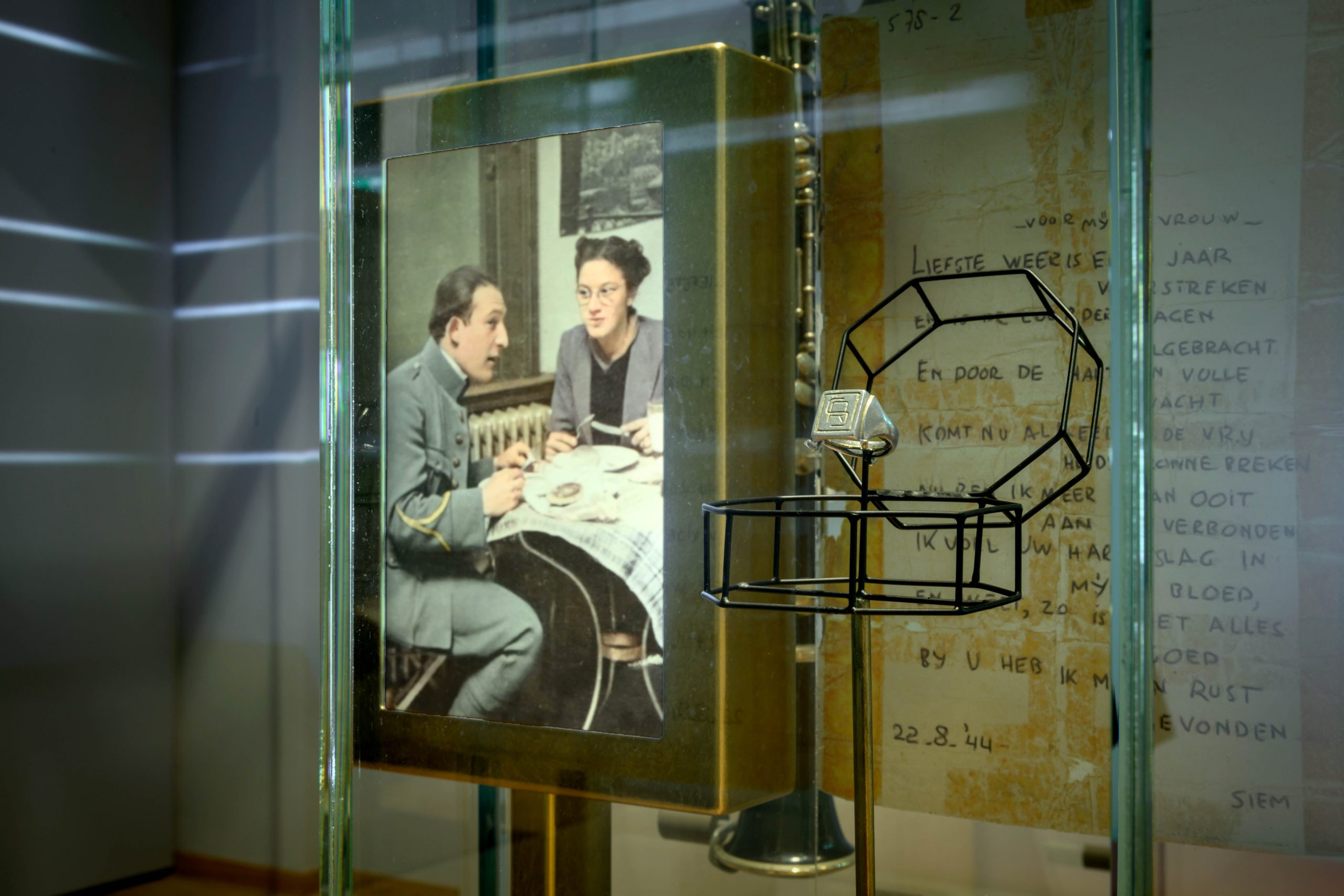
Photo by Mike Bink

1.2. Information about the initiative

Section 2. Description of the ICH involved

Community involvement in the identification and management of the ICH:

While the Holocaust itself is not considered Intangible Cultural Heritage (ICH), the National Holocaust Museum in Amsterdam provides a powerful example of how digital storytelling can be used to convey historical narratives effectively. This approach can offer valuable insights for ICH initiatives aiming to preserve and transmit ICH.

The value of the museum to the community extends beyond the Jewish community to humanity as a whole. It serves as a poignant reminder of the atrocities of the Holocaust and the resilience of its survivors. The museum’s use of personal stories and digital media helps visitors connect with this history on a deeply personal level, fostering a greater understanding and empathy.

This method ensures that the personal aspects of the Holocaust are not lost to time. By recording these narratives, the museum creates a lasting archive that can be accessed by future generations, ensuring that the lessons of the Holocaust remain relevant and impactful.

The museum’s approach is participatory in nature, involving Holocaust survivors and their families in the process of storytelling. Survivors share their personal experiences, which are then integrated into the museum’s exhibits. This collaborative effort ensures that the narratives remain authentic and respectful of those who lived through these events.

The National Holocaust Museum’s use of digital storytelling can serve as a model for ICH initiatives. By integrating personal stories with digital media, ICH projects can create compelling and memorable narratives that resonate with the public. This approach allows for repeated storytelling and broad dissemination through websites, podcasts, and other digital formats, reaching a larger audience beyond those who can visit in person.

By harnessing personal narratives and digital tools, ICH initiatives can ensure the preservation and transmission of ICH in a way that is engaging, accessible, and impactful. This method not only preserves the heritage but also enriches the cultural tourism experience, making the history and traditions more relatable and meaningful to visitors.

Section 3. Narrative creation and adaptation to digital communication format

Process of content creation

How is it communicated in a digital format?

Example of a ‘Forget me not’, photo by Mike Bink

The National Holocaust Museum uses extended interviews to create authentic digital narratives. Mick Groeneveld, the museum’s communication manager, explained that these interviews last at least three hours, from which a 3-4 minute story is edited. This approach allows the storytellers to share their experiences naturally without worrying about structure, ensuring the narrative remains genuine. Professional interviewers and editors are employed to conduct and refine these interviews.

VIDEO TESTIMONIES

1. Survivors and Descendants: Some of the 3-4 minute stories are derived from interviews with Holocaust survivors and their descendants, including Jewish people, Sinti, and Roma, from the museum’s established network. These narratives do not appear edited, maintaining the authenticity of the storyteller’s voice. Interviewees are selected based on their storytelling skills, and some are known for sharing their experiences in schools. The museum sometimes contacts potential storytellers, while others reach out to the museum themselves. A significant part of the exhibition focuses on individuals who survived the Holocaust thanks to the efforts of those working in the nursery where the museum is now located.

2. USC Shoah Foundation Archives: The museum also features video testimonies from the USC Shoah Foundation archives, providing additional perspectives and stories from Holocaust survivors.

NHm vertelt – Leo Vis, 9 mei 2023 (Full interview – in Dutch -, later edited into one of the 3-minute personal testimonies)

‘FORGET-ME-NOTS’ INSTALLATIONS

The museum has created 19 uniquely designed showcases called ‘Forget-me-nots,’ each dedicated to one Holocaust victim. These mixed media installations include a personal object, a portrait photo or video, a short text, and an audio fragment. The content for these installations is based on thorough research into the individual’s life. The museum edits this information into a narrative, which is then told by a voice actor in a video.

PODCASTS

The museum produces podcasts available on its website, Spotify, the Jewish Cultural Quarter’s Facebook page, and various other audio platforms. These podcasts extend the reach of the museum’s stories, making them accessible to a broader audience.

The museum’s method of using extended interviews ensures that the stories remain authentic and impactful. By focusing on personal experiences and employing professional production techniques, the museum creates engaging and memorable narratives. The use of mixed media installations and digital platforms like podcasts further enhances the accessibility and dissemination of these important stories, promoting cultural tourism and ensuring that the lessons of the Holocaust continue to resonate with future generations.

3.1. Local Population

The National Holocaust Museum actively involves the local Jewish community in multiple ways, ensuring their participation is both meaningful and impactful.

LEVELS AND MODELS OF INVOLVEMENT
  • Management and Governance: The Jewish community is well-represented in the museum’s management structure. This includes roles on the board, supervisory board, and works council. Many patrons of the Jewish Cultural Quarter, which includes the museum, are also from the Jewish community. Numerous staff members are Jewish, ensuring that the community’s perspectives and values are integrated into the museum’s operations.
  • Contributions and Collaborations: The museum relies heavily on the contributions (and donations) from the Jewish community. Their input is essential for developing both permanent and temporary exhibitions. Community members provide artifacts, stories, images, and background information, which form the core content of the museum’s displays.
  • Content Creation: Community participation is active rather than passive. Members of the Jewish community are co-producers in the storytelling process. They share personal narratives and experiences, which are then used to create authentic and compelling digital stories. These stories are further refined and edited by professional interviewers and editors to ensure high-quality presentations.

By actively involving the Jewish community as co-creators and decision-makers, the National Holocaust Museum maintains a strong, authentic connection to the stories it seeks to preserve and share. This participatory model not only enriches the museum’s content but also strengthens community bonds and ensures the accurate representation of historical experiences.

Section 4. Audience and methodologies

Target audience: tourists/visitors, local community, students, Cultural Heritage researchers/professionals

Reach:

Aim of sharing the stories:

Preserve traditions

Frequency: Permanent activity

The National Holocaust Museum, located in Amsterdam, employs various digital storytelling techniques to reach a broad audience. The museum has its own dedicated pages on the Jewish Cultural Quarter’s website, as well as active Facebook and Instagram accounts. It is also listed on numerous national and international cultural agendas and “what to do/see in Amsterdam” websites, increasing its visibility and accessibility.

The museum attracts approximately 3,000 visitors per week, both local and international. This significant footfall is partly due to its historical location. The museum is housed in the former crèche opposite the Hollandsche Schouwburg, where Jewish children were held before being transported by the German occupiers. Many children were saved by the crèche workers, and the escape route used is part of the museum’s permanent exhibition.

Mick Groeneveld, the museum’s communication manager, highlighted the unique connection of the building to the Holocaust: “Unlike other Holocaust Museums, the building in which our museum is housed was connected to the Holocaust at the time, so we didn’t need to reinforce that. It happened here, in this building”. This authenticity adds a powerful, immersive dimension to the museum’s exhibitions.

Through its digital platforms and historical narrative, the museum effectively disseminates its stories to a global audience, promoting cultural tourism and education. The combination of personal stories, digital storytelling, and the significant historical setting creates a compelling and engaging visitor experience.

Section 5. Innovative aspects

While the narrative techniques and digital tools used at the National Holocaust Museum are not groundbreaking individually, their combination within the museum’s unique context is innovative, especially for Holocaust storytelling. The integration of the building’s historical significance, along with objects, photos, videos, and podcasts featuring testimonies, creates a compelling and immersive experience.

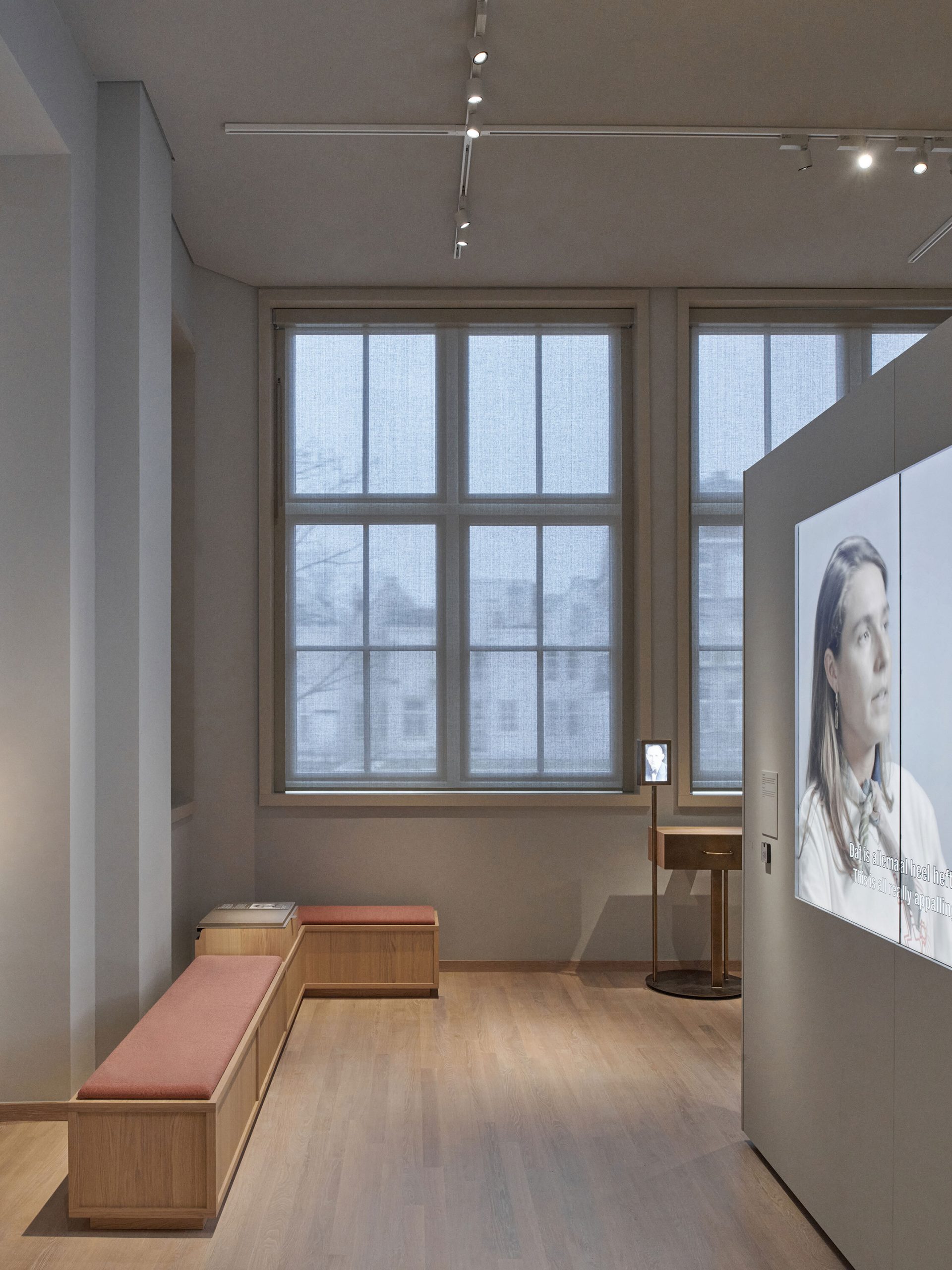
Unlike many Holocaust museums that rely on darkness to evoke a sense of discomfort, this museum presents the Holocaust in daylight, with artificial light used only when necessary. As Emile Schrijver, director of the Jewish Cultural Quarter, stated in Jodcast #12 on NPO Radio 5, “The Holocaust happened in broad daylight, while the sun was shining”. This approach aligns the narrative with the historical reality, making it more impactful.

Scattered throughout the museum are “witness benches”, intimate settings where one or two visitors can sit, put on headphones, and watch testimonies on small screens. This setup enhances the personal impact of the stories, fostering a deeper connection between the visitor and the narrative.

The testimonies themselves are carefully edited from extensive interviews, ensuring authenticity while maintaining viewer engagement. This method, while time-consuming and requiring skilled interviewers and editors, ensures high-quality content that resonates deeply with visitors.

However, it is important to note that such an approach can be costly, potentially challenging for organisations with tight budgets. Nonetheless, the museum’s method of combining historical context, personal narratives, and digital media offers a powerful model for effective storytelling and cultural preservation.


Witness bench, photo by Mike Bink
Daylight, photo by Office Winhov / ©Max Hart Nibbrig

Section 6. Impact

Impact on tourism:

Impact on local sustainable development:

SDG4. Quality education

The National Holocaust Museum demonstrates that personal stories can significantly enhance interest in and preservation of Intangible Cultural Heritage (ICH). While not everyone is a natural storyteller, the museum’s approach of structuring narratives through interviews offers a valuable model. By interviewing individuals with personal stories and using targeted questions to guide the narrative, the museum ensures that the stories are both authentic and engaging.

Editing a three-hour interview down to a four-minute story is a meticulous process requiring skilled interviewers and editors. Although this method is time-consuming and potentially costly, it provides a powerful and concise narrative.

Organisations with limited resources can adapt this approach by conducting shorter interviews and producing slightly longer final pieces. The key is to maintain a clear storyline and ask questions that encourage the interviewee to share their personal experiences meaningfully.

Training one interviewer to handle this task is more feasible and cost-effective than training multiple individuals in storytelling techniques. Organisations can collaborate to fund the training of a single interviewer who can then work across multiple projects.

Once the personal story is ready, it can be shared through various channels. In situ dissemination, such as the Holocaust Museum’s witness benches, provides an intimate setting for viewing. Alternatively, sharing stories via websites or podcasts can reach a broader audience, especially for organisations in remote areas.

The success of this initiative lies in the careful crafting of compelling personal stories. Whether presented in a museum setting or through digital platforms, these narratives create a deep, lasting impact on the audience, enhancing the preservation and appreciation of ICH.