Il Filò delle Agane (The Weakfulness of Agane) project, promoted by Lis Aganis Ecomuseum in Italy, aims to preserve and disseminate local oral stories linked to the Filò tradition. Targeting young people, children, students, local residents, and future generations, the project seeks to collect, systematise, and share oral testimonies.
The initiative began with researching stories and recording interviews and videos with key storytellers. These videos are available on the ecomuseum’s website, YouTube channel, and the platform “Raccontiamo L’Ecomuseo” (Let’s Tell the Ecomuseum). Collaboration with local schools helped in collecting materials and creating additional dissemination tools, such as a comic book. An open contest invited broader community participation, leading to tangible publications of intangible oral heritage.
In addition to the online database, the project organised events for both locals and visitors to promote dissemination. “Filò Evenings” involved sharing stories with musical accompaniment, recorded by a videomaker and shared online. Plans are underway for another event, “La notte dei Filò” (The Night of the Filò), funded by the Region, to further engage the community and celebrate this rich cultural heritage.
1.2. Information about the initiative
Contact person: Debora Del Basso
Position: Ecomuseum president
Number of people involved: Medium team
Profile of people involved: volunteers, researchers, staff, volunteers, community members, external partners
Qualification/training of people involved: traditional knowledge, low technical expertise, museum professionals, technical experts
Section 2. Description of the ICH involved
ICH Type:
Social practices, rituals and festive events
Oral traditions and expressions
ICH Recognition:
In danger of disappearing
Locally recognized
Well-known
Community involvement in the identification and management of the ICH:
Low
Medium
High
The Intangible Cultural Heritage (ICH) involved in the Filò delle Agane is deeply rooted in local oral traditions. Specifically, it aligns with UNESCO’s ICH domains, encompassing oral traditions and expressions, including language as a vehicle of intangible cultural heritage, as well as social practices.
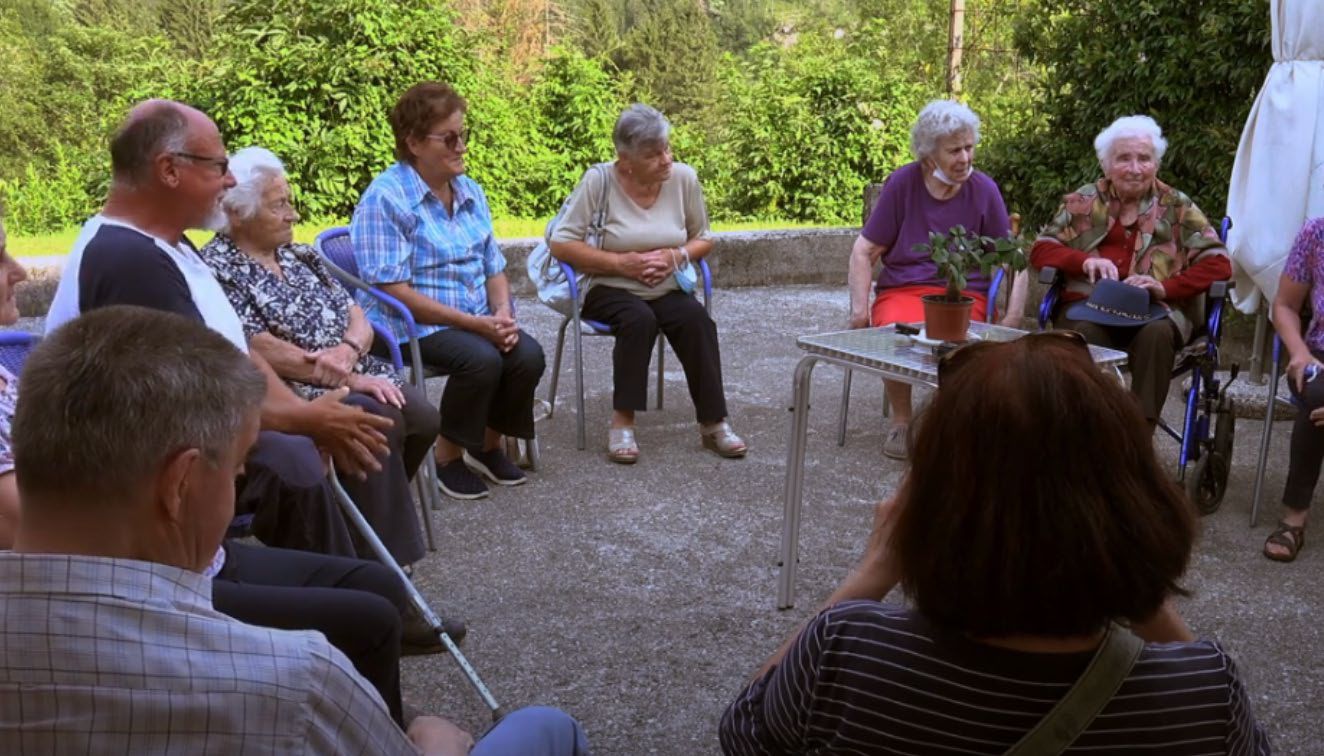
“Filò” were evening gatherings held in stables where people came together to do small tasks and share stories. Especially during the 20th century, these stables were among the few warm places in rural homes. Both men and women would gather there, often accompanied by curious children, to tell stories. This tradition was particularly strong in Friuli and Veneto, leading to some stories being shared between the two regions, albeit in different dialects.
Additionally, traders and travellers who moved between towns also participated in these Filò, bringing with them stories of events from other places. This was especially important in a time before modern communication, making these gatherings a crucial means of sharing information and preserving oral traditions.
Elderly people sharing stories. Source: Ecomuseum LIS Aganis.
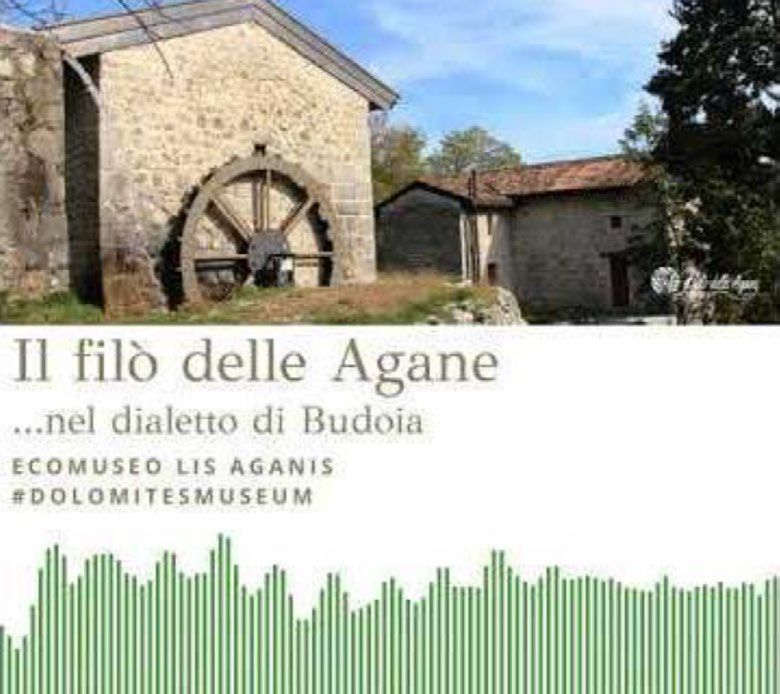
Additionally, the Filò delle Agane may attract interest from outsiders, particularly regarding the Agane (Lis Aganis), mythical female figures associated with watercourses and caves. These figures, with their ambiguous and ambivalent relationship with humans, are part of the legendary world of many Alpine countries. The Ecomuseum chose this tale from the oral tradition narrated in Val Colvera, in the Pedemontana Pordenonese, to highlight this rich cultural heritage.
Recorded story. Source: Ecomuseo Lis Aganis
Section 3. Narrative creation and
adaptation to digital communication format
Process of content creation
How is it communicated
in a digital format?
Audiovisual
Website, video/audio platform (Youtube)
The process began by identifying a local storyteller, Paolo Paron, a member of the ecomuseum who already had a database of stories. This was followed by collecting material and organising the filming to safeguard and disseminate the heritage. The protagonists in the Filò delle Agane videos are local elderly people who spoke spontaneously, similar to storytelling to a child. This spontaneity is considered the essence of the Filò, says Margherita Piazza, Ecomuseum Communication Officer.
Local professional videographers, contracted by the Ecomuseum, produced the videos. Some of Paolo Paron’s narratives were recorded in a studio, while others were captured in more natural, impromptu settings with words and music, adding authenticity. Consequently, the shots are static, lacking dynamic close-ups and detailed hand shots typical of studio recordings. Participants were aware of the filming and were equipped with microphones.
The Ecomuseum aims to systematise this information. Interviews, including those with Paolo Paron, were structured but based on individuals with extensive knowledge. The plan is to gradually gather more testimonies following a structured approach. Additionally, the recently created platform “Let’s Tell the Ecomuseum” currently catalogues documents, texts, images, and photographs, with plans to include audio recordings and interviews in the future, says Debora Del Basso, the Ecomuseum president.
3.1. Local Population
The Filò delle Agane is a bottom-up project initiated by Paolo Paron, a member of the Ecomuseum. As a storyteller and ballad singer, Paolo had already collected material about local oral traditions. His role as a knowledge repository provided the initial “raw material” for the project. Local people shared their stories with him, and he held storytelling evenings accompanied by music at his agricultural company.
The project is managed by the Ecomuseum, with Paolo Paron and other local collaborators playing key roles. Local professional videographers were contracted to film the stories, and the Ecomuseum created a YouTube channel and a dedicated playlist to disseminate the content.
The initiative encourages active participation from the community. Local people are not just interviewees but co-producers of content. They share stories, participate in storytelling evenings, and contribute to the digital platform “Raccontiamo l’Ecomuseo” (Let’s Tell the Ecomuseum).
The organisational structure is informal and collaborative. While the Ecomuseum oversees the project, decision-making is shared with local participants, creating an egalitarian environment where both interviewers and interviewees contribute equally. The aim is to systematise and disseminate traditional oral stories, making them accessible to a wider audience.
Innovative Engagement Strategies:
Digital Platform: “Raccontiamo l’Ecomuseo” serves as both a database and a dissemination tool, allowing continuous contributions from the community. It features sections for traditional stories and new stories, encouraging creativity and participation from writers and other community members.
Schools and Workshops: The project collaborates with local schools, involving teachers and students in gathering oral testimonials and creating new stories. Workshops with artists and cartoonists further engage students, making the process interactive and educational.
Expats Involvement: There are plans to engage expatriates by creating a section on the platform where they can share stories they know, either through writing, recording, or videos.
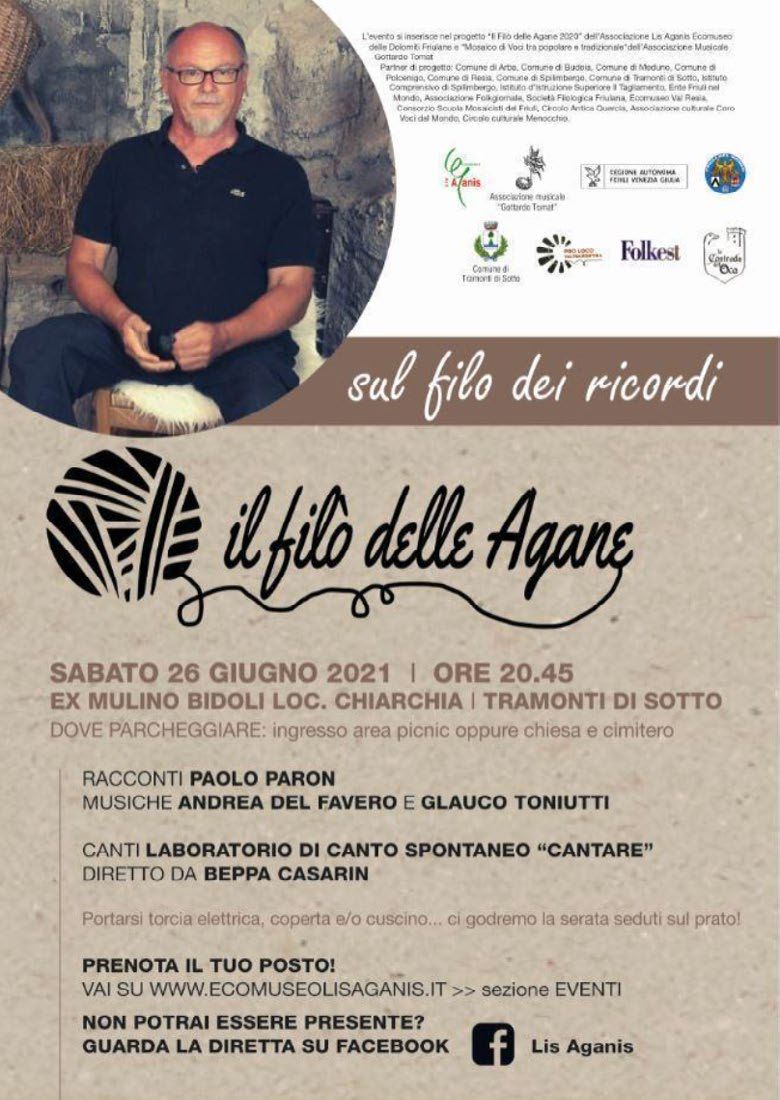
A flyer of a local event of Filò project. Source: Ecomuseo Lis Aganis
The initiative has fostered a sense of ownership and active involvement within the community. By encouraging storytelling and the creation of new narratives, the project ensures that local traditions are preserved and revitalised for future generations.
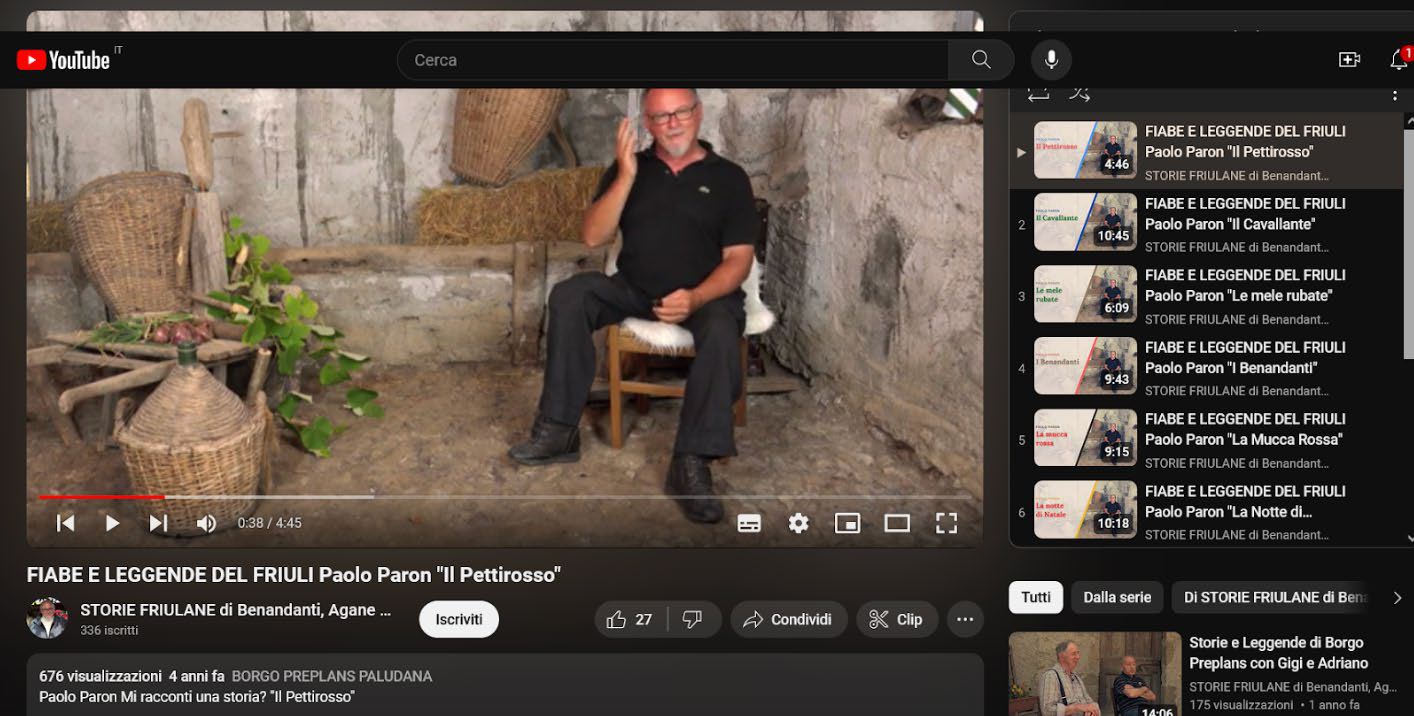
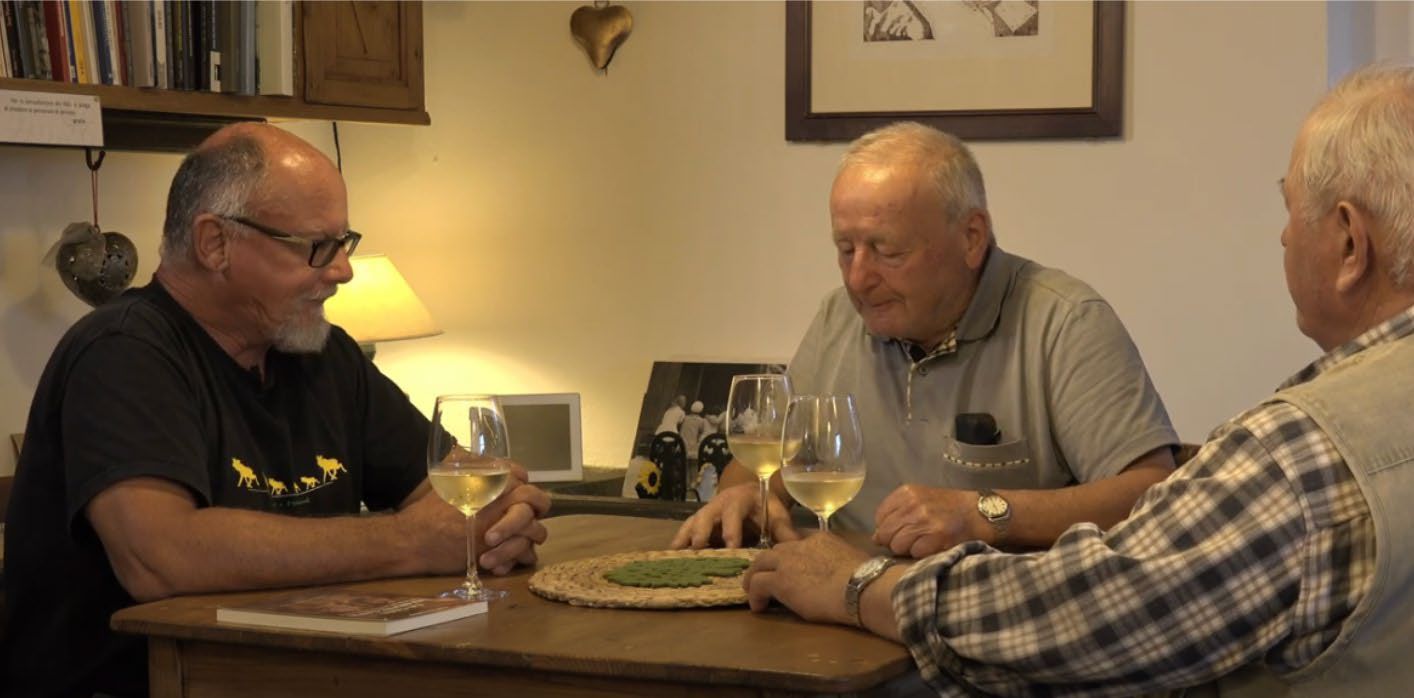
Youtube playlist, a video with Paolo Paron.. Source: Ecomuseo Lis Aganis Youtube page.Screenshot of the video where local people share stories with the storyteller Paolo Paron (on the left). Source: Ecomuseo Lis Aganis.
Section 4. Audience and methodologies
Target audience: local community, students
Reach:
Low
Medium
High
Aim of sharing the stories:
Preserve traditions
Social cohesion
Frequency: Permanent activity
The primary aim of the project is to preserve and share stories and cultural heritage with diverse audiences, particularly young people, children, students, and local residents. It also seeks to reach future generations who may not have had the chance to learn from their grandparents or other traditional storytellers. The ecomuseum has attracted interest from various quarters, including individuals, documentary film companies, and a student from the University of Venice planning a documentary. This indicates not only anthropological and ethnographic interest but also potential for knowledge-based tourism.
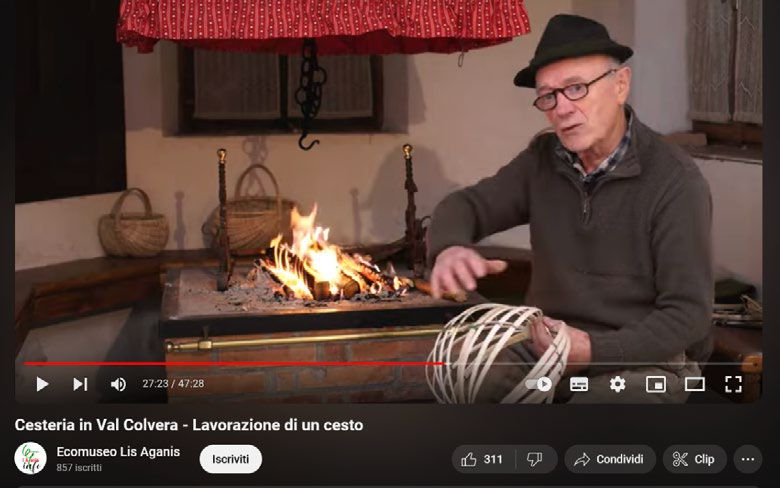
The ecomuseum monitors its social media channels, particularly YouTube views, and has been satisfied with the engagement, says the communication specialist, Margherita. Monitoring helps understand audience preferences and improve content. For instance, they found that shorter videos tend to perform better given current attention spans. However, content quality and storytelling are crucial, as evidenced by a highly viewed video featuring a basket maker from Frisanco, which resonated with viewers through its authentic narrative.
As videos spread, they spark more interest and interaction. People contact the ecomuseum, sharing additional stories or variations of the ones featured, saying: “my grandmother also knew this story, but differently”. This ongoing exchange helps uncover more cultural narratives and engages more storytellers.
The ecomuseum also organised a festival to disseminate the project’s results, featuring readings and music. This event involved families, schools, and the broader community. It was promoted through schools, Promo Turismo (the regional tourism body), and newsletters, ensuring wide outreach and participation.
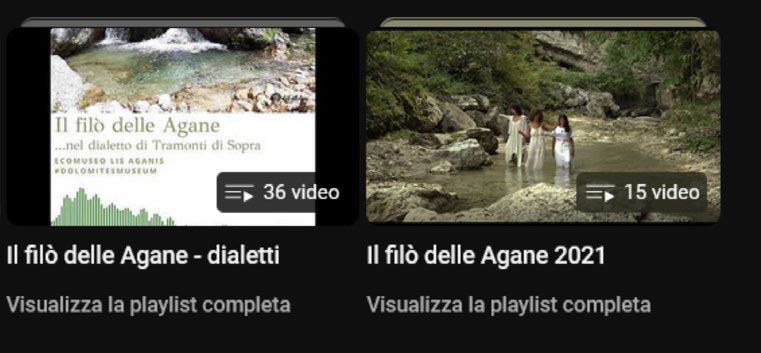
The ecomuseum youtube channel. Source: Ecomuseo Lis Aganis Youtube page.One of the most viewed videos. Source: Ecomuseo Lis Aganis Youtube pageEcomuseum “il Filò delle Agane” playlist. Source: Ecomuseo Lis Aganis Youtube page
Section 5. Innovative aspects
The most innovative aspect of the initiative is the storytelling platform, “Raccontiamo l’Ecomuseo,” designed as a comprehensive database for collecting and preserving stories related to the territory. This project stands out as a social innovation by involving multiple generations in preserving oral traditions through digital storytelling tools. Technology is utilised to enhance heritage valorisation, preservation, and accessibility.
Platform Structure
The platform is organised into thematic sections: myths and legends, crafts, community life, archaeology, landscape, and tastes and flavours. Each story is accompanied by a photo and a title, and categorised by the author’s and producer’s names, location (e.g., YouTube playlist), date, source/producer, and the date and place of collection.
Pandemic Response and Further Projects
When the Filò project began in 2019, the COVID-19 pandemic prompted an increase in story collection, which the ecomuseum then shared.
The “Diario delle Agane” project, linked to the Filò delle Agane, was funded by the “Ripartenza Cultura e Sport” initiative, which aimed to revive cultural and sports activities and create jobs in sectors affected by COVID-19 restrictions. This project reactivated community projects, initiatives, and relationships, focusing on local communities and their heritage. The diary includes various pages that provide a comprehensive narrative of the Ecomuseum area.
Another innovative project, “Dolomites,” in collaboration with the Dolomiti territories, involved collecting oral stories in local dialects and preserving them on a digital platform. This effort further highlights the initiative’s commitment to using technology to preserve and promote cultural heritage.
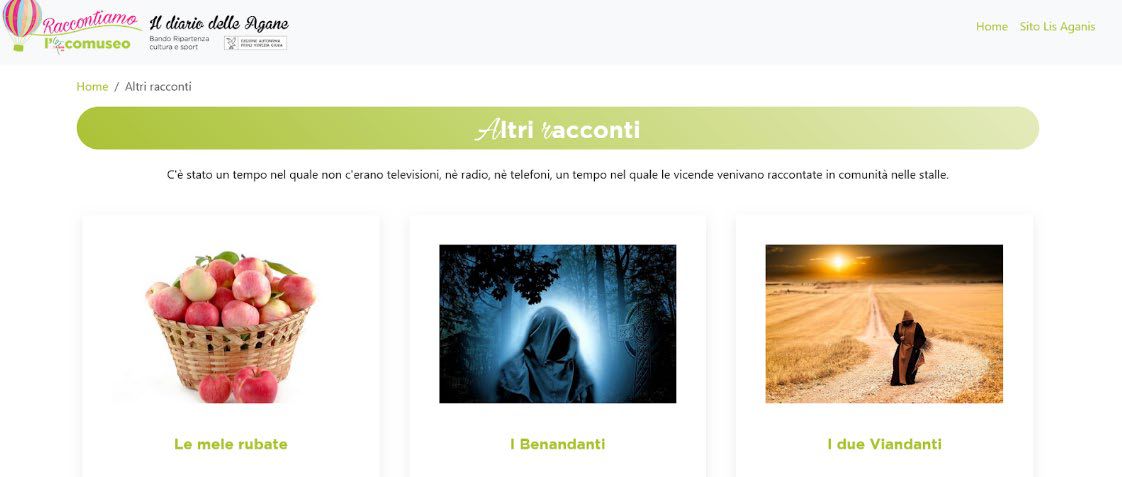
The platform: Raccontiamo l’ecomuseo. Source: Ecomuseo Lis Aganis web page
Section 6. Impact
Impact on tourism:
Low
Medium
High
Impact on local sustainable development:
SDG3. Good health and well-being
SDG4. Quality education
SDG8. Decent work and economic growth
SDG11. Sustainable cities and communities
The initiative had a significant positive impact on sustainable development, primarily by enhancing people’s wellbeing. It stimulated community participation and strengthened social cohesion by bringing together different generations to discover and rediscover relationships.
The project also created jobs for local video makers and illustrators, who were hired by the ecomuseum to film storytellers. An upcoming event, “La notte dei Filò” (The Night of the Filò), funded by the Region, will further showcase the initiative’s impact. This event will be held in a traditional village, using locations like old stables, workshops, and laboratories that have preserved their original architecture. These settings will host storytellers, likely dressed in 20th-century attire, narrating stories of past practices.
The event will be open to both the local community and potential tourists, aiming to share the rich cultural heritage with a broader audience. Previous events, such as the Filò delle Agane festival, have seen an average attendance of around a hundred people, indicating a strong interest and engagement from the community.
We use cookies to ensure that we give you the best user experience on our website. If you keep using this website we assume that you agree.