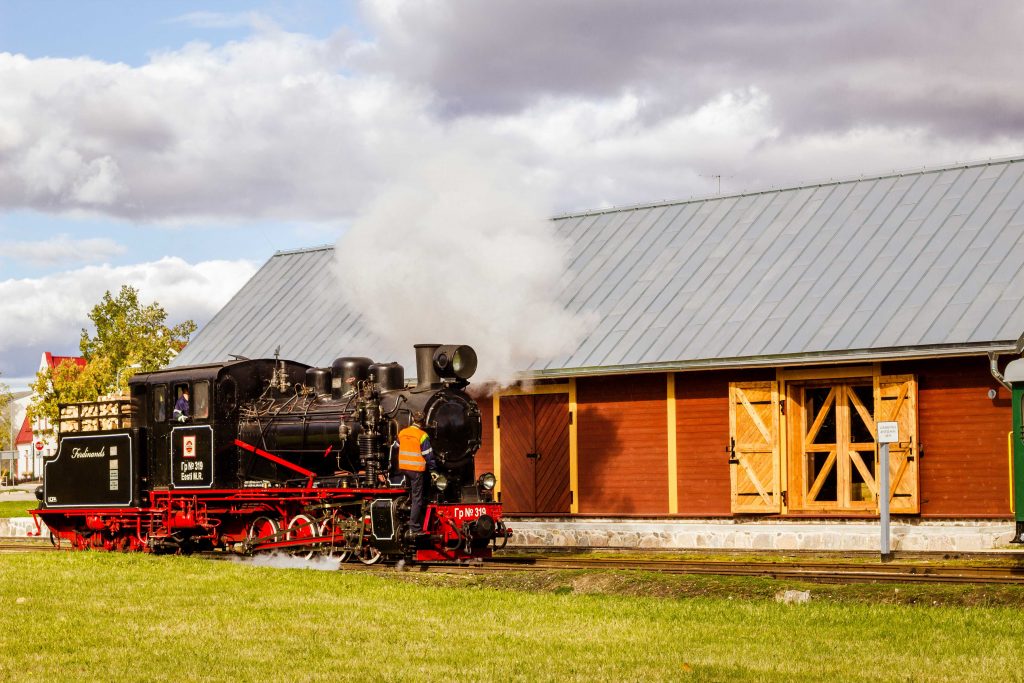
The Aluksne Banitis Station project, developed by the Aluksne Region Municipality in Latvia, is a renovated old baggage barn now housing a multimedia exposition. This exhibition reflects the local people’s stories related to the narrow-gauge train, Banitis, and its railway line, Aluksne-Gulbene. Banitis is the only fully operational narrow-gauge railway line in the Baltic States that functions as public transport, making it a significant part of the local community’s identity
The renovated station’s barn where the multimedia exposition is located. Source: Aluksnes Municipality Tourism Information Centre.
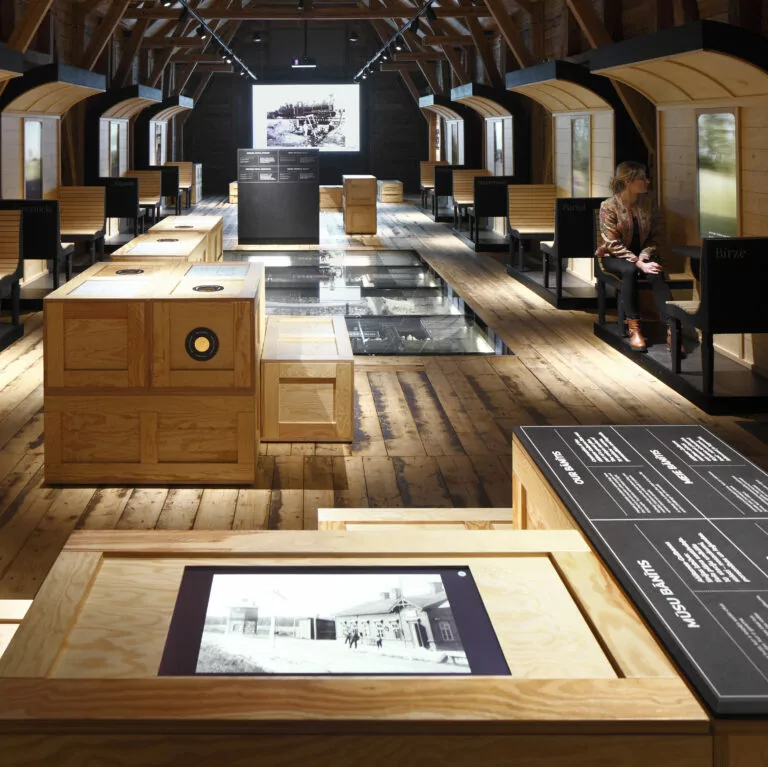
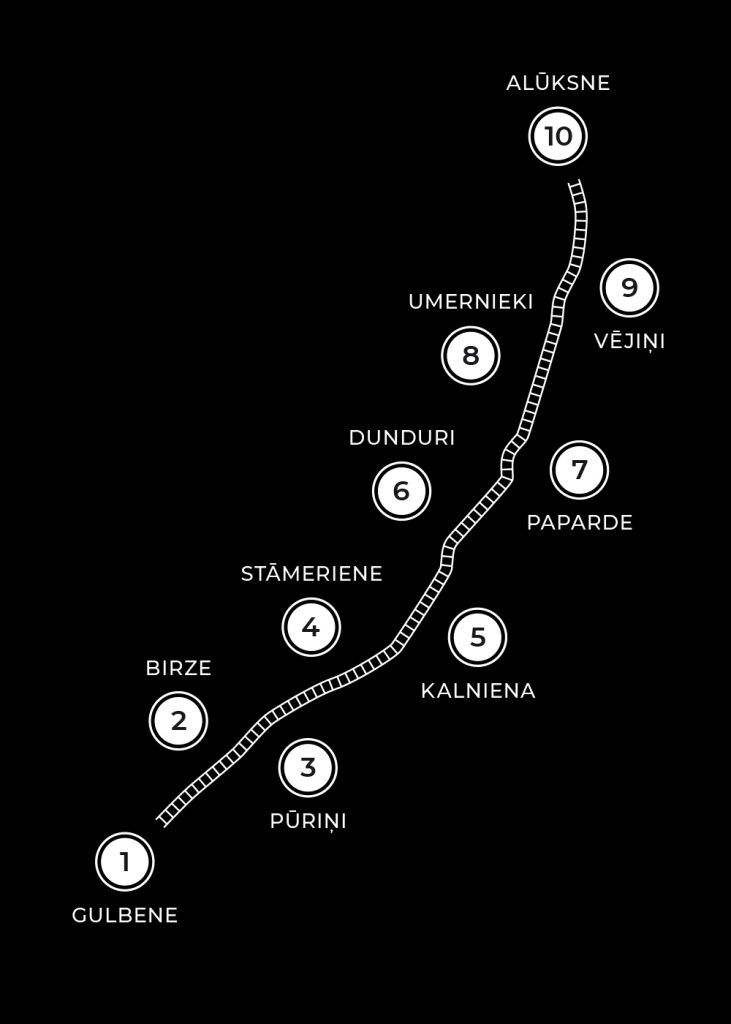
Opened in 2018, the exposition features memories of local people about each station along the railway line. Visitors can experience a virtual ride on the train by sitting at an imitated train window, where they see the passing landscape and hear stories related to each station narrated by locals.
The central theme of the exposition is Banitis as a friend, helper, and inspirer. The stories are seasonal, with ten recorded and filmed in summer and ten in winter. The Aluksne Banitis Station continues to receive new stories from the local community, which are recorded and published on their Facebook page. This ongoing collection ensures the preservation and dissemination of the cultural heritage associated with Banitis.
Interior of the exposition at Aluksnes Banitis Station. Source: Aluksnes Municipality Tourism Information Centre.
1.2. Information about the initiative
Contact person: Dace Bumbiere-Augule
Position: Manager of the Aluksne Banitis Station
Number of people involved: 10 (small team)
Profile of people involved: staff, external partners
Qualification/training of people involved: academics/researchers, museum professionals, technical experts
Section 2. Description of the ICH involved
ICH Type:
Social practices, rituals and festive events
ICH Recognition:
In danger of disappearing
Locally recognized
Well-known
Community involvement in the identification and management of the ICH:
Low
Medium
High
The Aluksne Banitis Station project has successfully gathered and preserved invaluable intangible cultural heritage, deeply rooted in the collective experiences surrounding the Aluksne-Gulbene railway line and its operations. These stories, collected from former station masters, railway workers, and passengers, offer unique insights into life along the Banitis line, revealing the social, economic, and cultural dynamics that have shaped the local community.
The Aluksne-Gulbene railway line is listed as a Monument of National Importance, a status achieved through the dedication and enthusiasm of those who worked tirelessly to preserve it. Today, apart from serving as public transport for locals, the Banitis train has become a favourite tourist attraction. However, the railway’s continued existence relies heavily on the skilled mechanics, engine drivers, and other specialists whose expertise is gradually diminishing.
The project aims to raise awareness and attract younger generations to sustain the railway’s operations. Aluksne Banitis Station, through its digitised stories, not only preserves this heritage but also serves a crucial marketing role for the railway. The station is highly active on social media, particularly Facebook, where it publishes these narratives. “We can see that more and more local people are starting to follow our Facebook profile and start to comment”, says Dace Bumbiere-Augule, Manager of Aluksne Banitis Station.
“Initially there has been a dual response from the local community for investing public money into something like reconstruction of the old station’s barn instead of hospital or social care but at the same time the very narrow-gauge railway train Banitis has always been a very important and strong part of their identity”.
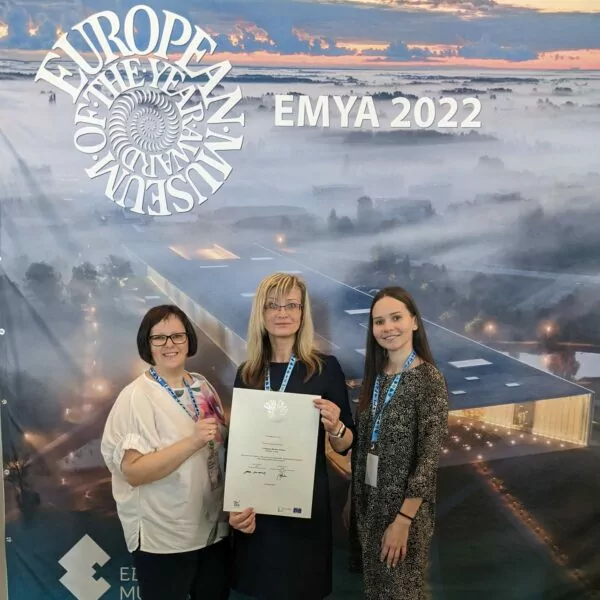
To further promote the railway and its heritage, the Aluksne Banitis Station has prepared entries for various awards, resulting in significant recognition. The exposition has won several architectural and design awards, as well as the European Culture Tourism Network’s (ECTN) “Destination of Sustainable Cultural Tourism 2020” award. Additionally, Aluksne Banitis Station was nominated by EMYA2022 (European Museum of the Year 2022) among the 60 best museums in Europe.
“When the first awards started to come in and tourists along with them, then also the sceptics about the project acknowledged the socio-economic importance of the Aluksne Banitis Station”, comments Dace Bumbiere-Augule.
In celebration of the exposition’s fifth anniversary, the Aluksne Tourism Information Centre published the magazine “The Stories of Aluksnes Banitis Station”, aimed at preserving and popularising the community’s memories related to the Aluksne-Gulbene railway and encouraging visits to the exposition.
Overall, the Aluksne Banitis Station project effectively preserves, promotes, and revitalises the intangible cultural heritage associated with the Banitis railway, ensuring its continuity for future generations while boosting cultural tourism in the region.
Section 3. Narrative creation and
adaptation to digital communication format
Process of content creation
How is it communicated
in a digital format?
Audiovisual, multimedia
On-site exhibition, social media
At Aluksne Banitis Station, multimedia storytelling brings the narrative of Banitis to life, portraying it as a friend, helper, and inspirer. This approach blends sight, sound, and emotions, emphasising that the essence of the journey lies not just in reaching the destination but in the memories and connections forged along the way.
The creative team at Aluksnes Banitis Station had a clear vision for the exposition. They aimed to combine video landscapes with local people’s memories of the Banitis narrow-gauge railway, linking it to various historic events and showcasing the technical aspects and operations of the railway line.
Stories were collected during everyday conversations with locals connected to the Aluksne-Gulbene railway line. Promising storytellers were invited to share their narratives on camera. The production company “Jura Podnieka studija”, experienced in documentary filmmaking, handled the filming.
Map of the stations of the AluksneGulbene railway line. Source: Aluksnes Municipality Tourism Information Centre.
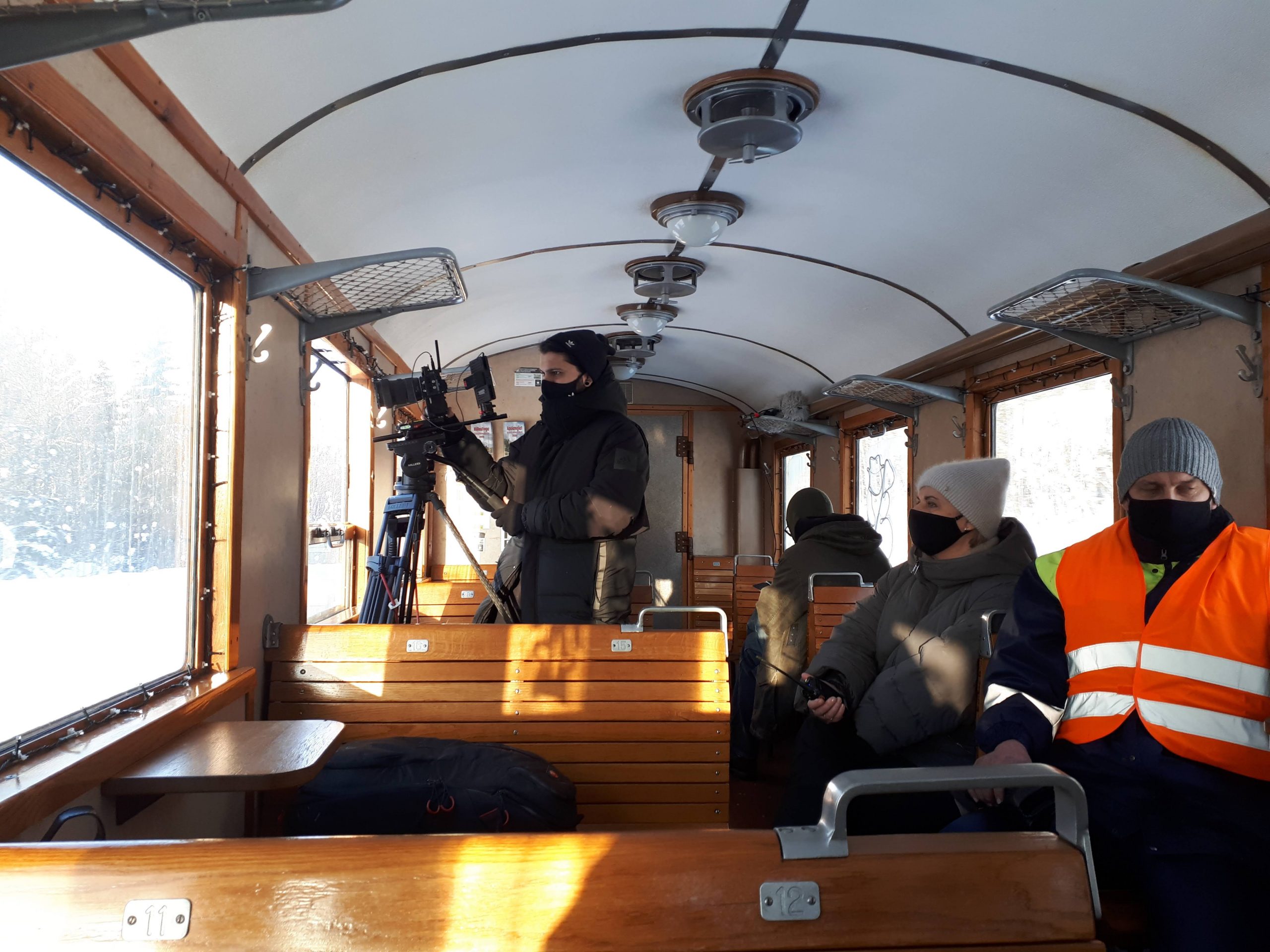
The filming process had two stages: capturing the passing landscapes and scenes of people boarding and alighting the train, followed by recording the personal stories.
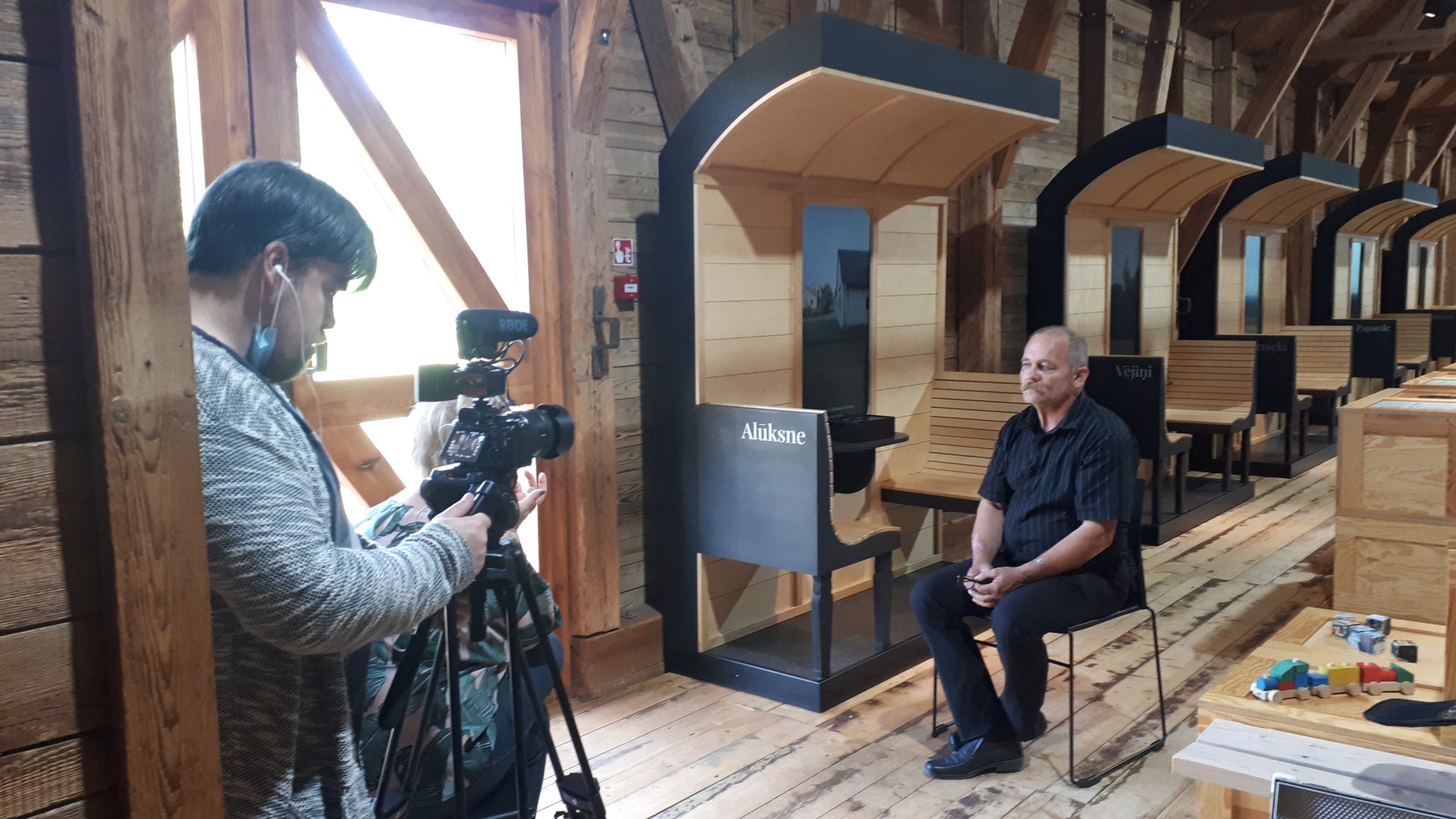
These elements were then combined. Winter filming was particularly challenging, occurring at -20°C during the COVID-19 pandemic, which limited the number of people who could gather. Some video stories feature people wearing masks, documenting the recent history of COVID-19.
Filming process during winter and Covid-19 time. Source: Aluksnes Municipality Tourism Information Centre.
This innovative approach effectively preserves and disseminates the cultural heritage of the Banitis railway, making it accessible to a broader audience.
3.1. Local Population
The initiative to renovate the old, empty barn at Aluksne Station, owned by the Aluksne Region Municipality, aimed to transform it into a tourist attraction that tells the story of the Banitis train. Central to this initiative was the collaboration with the local community, whose stories and memories are the heart of the exposition.
Residents were actively involved in shaping the content through participatory meetings, interviews, and community events. In Aluksne, a province where people know each other well, the most effective method for involving locals was through “word of mouth” and personal relationships.
The initial participants included those who worked on the railway line and the train, residents living near the stations, and individuals who used the train, such as students commuting to school.
As the first memories were published at the exposition and the Aluksnes Banitis Station, more stories started coming in. This growing collection of narratives further enriched the project. “In sensing and mentally devising the exhibition design, we thought about local patriotism, about the power and stories of the place, and about the people for whom the Banitis was, is, and will be part of their daily lives,” comments Inguna Elere from the company “H2E Design”, which was also involved in the exhibition’s creative team.
This community-driven approach ensured that the exposition authentically represented the cultural heritage and collective memory of the Aluksne-Gulbene railway line.
Section 4. Audience and methodologies
Target audience: tourists/visitors
Reach:
Low
Medium
High
Aim of sharing the stories:
Preserve traditions
Promote tourism
Frequency: Permanent activity
The dissemination of the Aluksnes Banitis Station’s narratives employs various strategies to reach a broad audience and ensure the preservation and appreciation of the intangible cultural heritage represented. The primary communication platform is Facebook, where new stories from the local community are regularly published. Additionally, Instagram is utilised to attract a younger audience, featuring a special character, the fox, who guides children through the stories at the exposition.
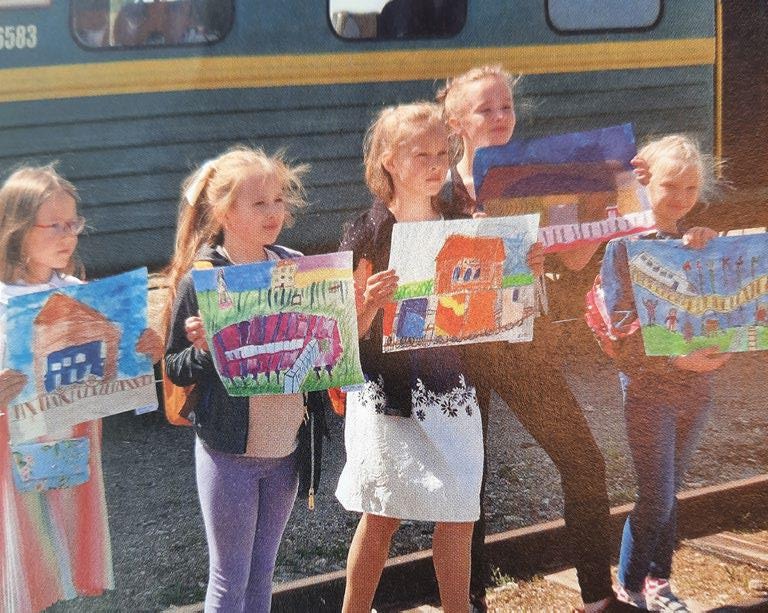
Furthermore, Aluksnes Banitis Station collaborates with the local art school and other educational institutions to promote the Banitis story through creative workshops. These workshops engage students and foster a deeper connection to the cultural heritage, ensuring its transmission to future generations.
By leveraging social media and educational partnerships, Aluksnes Banitis Station effectively disseminates its rich heritage, engaging diverse audiences and fostering a strong sense of community identity.
Special public events are organised to showcase the Banitis stories to the community. These gatherings serve as platforms for dialogue, reflection, and storytelling, allowing participants to connect with the railway as part of their heritage and identity.
The exposition attracts tourists from both Latvia and abroad. Whether they are railway enthusiasts, history buffs, or curious travellers, visitors are drawn to the unique and authentic experience of the railway’s operations and the local life along its route.
Aluksnes Banitis Station cooperates with local arts school. Source: Aluksnes Municipality Tourism Information Centre.
“There is always interest in railways around the world. They have an aura of romanticism and sentiment. Equally important are the stories of the people working on the railway. We can look at the Aluksne-Gulbene narrow gauge railway line as a railway of the world,” comments Dace Bumbiere Augule.
Section 5. Innovative aspects
The initiative to digitise and showcase local stories at Aluksnes Banitis Station represents an innovative approach to heritage preservation and dissemination. By utilising multimedia technologies, visitors are immersed in an engaging narrative that vividly brings the Banitis railway line to life.
The exposition evokes the experience of being a passenger on the AluksnesGulbene Banitis train. Through simulated carriage windows, visitors see the passing landscape and listen to memories of the Banitis and the ten stations along the route. Achieving this effect required multidisciplinary teamwork, with the creative concept
designed by “H2E Design”.
Aluksnes Banitis Station employs online communication, educational programmes, community events, and partnerships with cultural and tourism organisations. By making the stories accessible to people of different ages and backgrounds, the initiative fosters greater awareness, appreciation, and engagement with cultural heritage. Sustainability was a key consideration in planning the exposition, with efforts made to ensure long-term viability through thoughtful design, materials, and implementation.
“It is important that the exposition can be supplemented with new content to attract repeat visits. Aluksnes Banitis Station’s team has achieved this by adding new digitised local stories to the exposition. Now there are summer stories and winter stories, with scope to add more content in the future”, comments Inguna Elere.
Section 6. Impact
Impact on tourism:
Low
Medium
High
Impact on local sustainable development:
SDG9. Industry, Innovation and Infrastructure
SDG11. Sustainable cities and communities
The opening of the exposition at Aluksnes Banitis Station was part of a larger project aimed at significantly improving the surrounding infrastructure. This included the adjustment of roads, pavements, and parking areas, as well as the establishment of bicycle stands. These improvements catalysed the development of the entire station quarter, particularly benefiting the hospitality sector.
The café “Tvaiks un Ogle” opened at the station, and the “Bahnhofs Hotel” was established in the old railway hotel building. The newly opened Business Station has attracted various businesses, including a ceramics workshop, fish producer, printing studio, and brewery, all of which organise events. An old granary built in 1939 has been developed by a private owner into an engine exhibition. The residents of the station quarter have become ambassadors of the Banitis train and railway, incorporating it into their stories, marketing activities, and decorations.
New businesses provide opportunities for locals to gather and spend quality time. Outside Aluksnes Banitis Station, there is a mobility point for bicycles, and the Banitis route is part of the long-distance cycling route “Green Railway”. Visitors can ride the train and hop off at stations to continue their journey by bike.
“Several years ago, the quarter around Aluksne station was very depressive and abandoned—the most unpleasant part of the city. But thanks to brave dreams, wellthought-out projects, and the municipality’s determination, it has become the pride of our city”, says Ivete Velkere, head of Aluksne Tourism Information Centre. “Local entrepreneurs have believed in the development of the quarter, and now we are working together. It is like a snowball effect—one initiative attracts the next. The impulse for all this development was the opening of Aluksnes Banitis Station with stories from the local community”.
In its first year, 2018, Aluksnes Banitis Station attracted 2312 visitors. The number of visitors peaked at 9896 in 2020 and has stabilised at around 7000 annually in the past two years. In 2023, 6.13% of visitors were foreign tourists, with neighbouring Estonians making up the largest group, alongside visitors from various other countries.
“During the first years of opening, the exposition was a major magnet for attracting visitors to Aluksne. Around 50% of visitors came specifically for the exposition”, says Dace Bumbiere-Augule.
We use cookies to ensure that we give you the best user experience on our website. If you keep using this website we assume that you agree.