5. Spotting Intangible Heritage: Increasing Public Awareness with QR Codes

Section 1. Introduction

1.1. General Information

Name of the Initiative: Spotting Intangible Heritage
Location: Netherlands
Promoter name: Dutch Center for Intangible Cultural Heritage
Type of entity: Knowledge centre
Ownership: NGO

Contact and Communication Details:

The Dutch Centre for Intangible Cultural Heritage, representing the Ministry of Education, Culture and Science (OCW, Dutch abbreviation), implements the UNESCO Convention for the Safeguarding of Intangible Cultural Heritage in the Netherlands. One key obligation from this treaty is to compile a national inventory of intangible cultural heritage. The Centre supports communities, groups, and individuals in preserving their intangible heritage for future generations. This support includes assistance with heritage registration in the Network, the Inventory of Intangible Heritage in the Netherlands, and the Register of Inspiring Examples of Safeguarding. It also offers courses and training on safeguarding practices, developing safeguarding plans, and raising awareness about the importance of intangible heritage. As of early 2024, the national inventory includes approximately 200 intangible heritage elements.
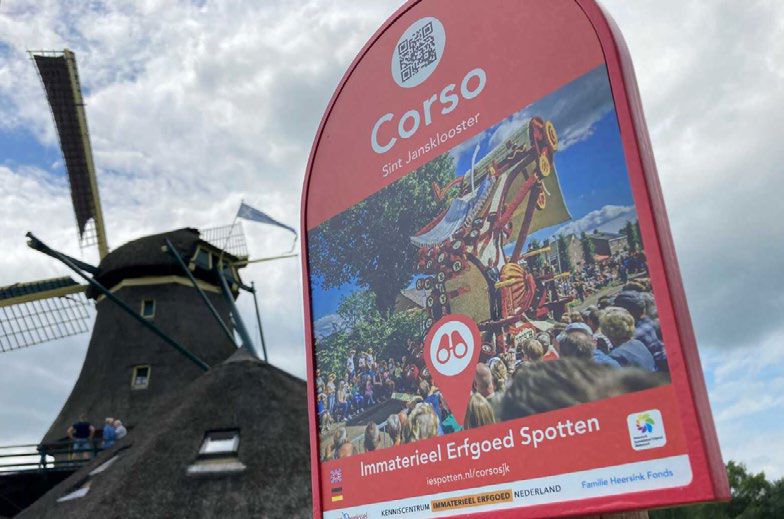
“Spot Immaterial Heritage” sign. Source: initiative’s webpage.
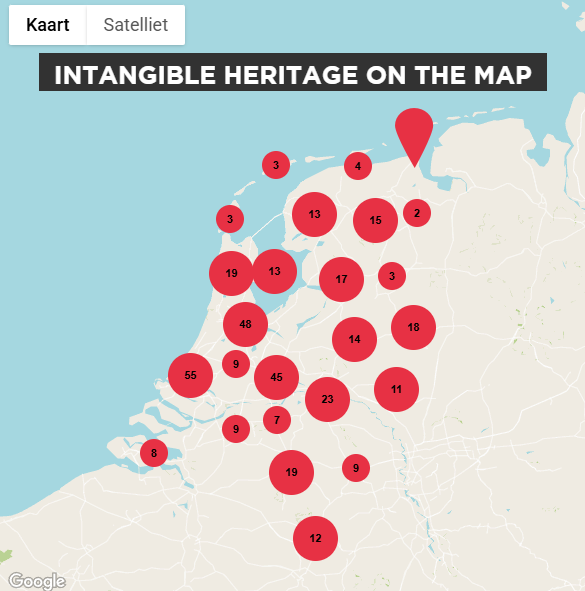
Interactive map of ICH listed in the the Netherlands Intangible Heritage Knowledge Center. Source: Dutch Center for Intangible Cultural Heritage webpage. .

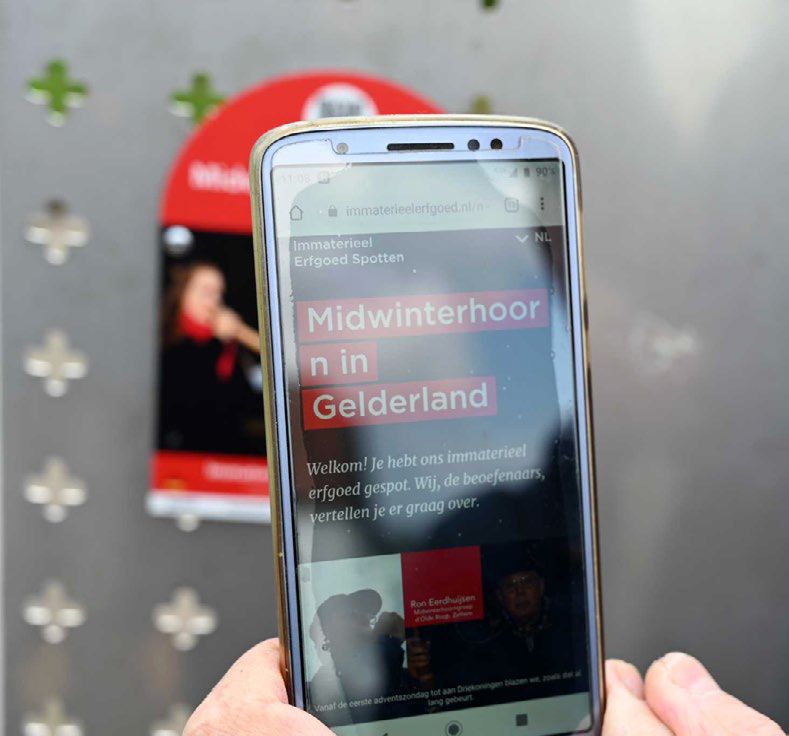
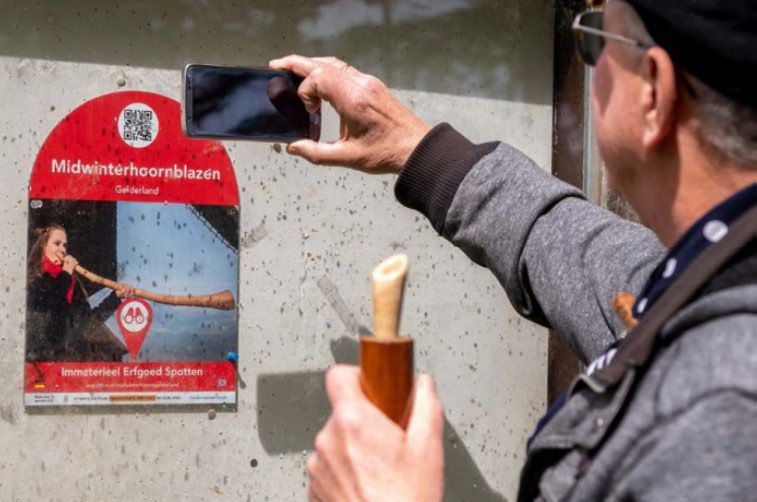
“Spotting Intangible Heritage” is a project designed to raise public awareness of intangible cultural heritage (ICH) in the Netherlands by using QR codes placed at relevant locations. This initiative allows visitors to regions, villages, or cities to discover local intangible heritage. Examples include the Sint Maarten Celebration in Utrecht, hedge weaving in nature reserves, and midwinter horn blowing in Gelderland, all of which can be explored through signs equipped with QR codes.

1.2. Information about the initiative

Section 2. Description of the ICH involved

ICH Type:

Social practices, rituals and festive events

Traditional craftsmanship

Performing arts

Created with Fabric.js 5.2.4

Oral traditions and expressions

Created with Fabric.js 5.2.4

Knowledge and practices concerning nature and the universe

ICH Recognition:

Community involvement in the identification and management of the ICH:

Since 2019, the Netherlands Intangible Heritage Knowledge Center has collaborated with heritage communities on the “Intangible Heritage Spotting” project, placing signs with QR codes throughout the country. Initially, the project began with an open call for ‘spots’. However, the procedure has since evolved. Now, community members first nominate their intangible cultural heritage (ICH) online to the Knowledge Center, which has developed a specific procedure and forms for this purpose. Full details of the procedure can be found online.

Once the ICH is listed, community members can apply to have their heritage included as a QR code spot. Communities listed in the National Inventory decide their participation, design their ICH Spotting page, select photos, choose locations, and write the texts. They also contribute to the short video and place the signs at popular tourist locations. The Knowledge Center monitors the distribution of QR code locations and the variety of ICH presented.

“Spot Immaterial Heritage” QR code spot in Corso, Overijssel Province, about the Sint Jansklooster parade. Source: initiative’s webpage

One example of a QR spot location is Kampen, an old town in the Province of Overijssel and a former member of the Hanseatic League. Here, visitors can learn about the tradition of Milk Can Shooting, a practice over 100 years old used to usher in the New Year. Metal milk cans filled with carbide and water are ignited, causing the lids to shoot off due to pressure buildup. This tradition, passed down through generations, sees hundreds of cans popping around New Year’s Eve. The Kampen marksmen’s guild successfully listed this tradition as intangible cultural heritage in 2023. A short video on YouTube provides an overview and highlights the community’s involvement.

Milk can shooting tradition in Kampen. Source: initiative’s webpage

Section 3. Narrative creation and adaptation to digital communication format

Process of content creation

How is it communicated in a digital format?

The Knowledge Center begins by drafting a basic script that outlines the essential information to be included in the narrative. However, the community has the autonomy to decide who will tell the story, who will appear in the visuals, and what content will be used, including any existing footage.

For the Knowledge Center, it is crucial that the final narrative, presented to the public, includes the personal experiences of the storyteller, conveyed in their own words.

As Susanna Bergwerff-Verburg states, “It is not the history of the ICH, but the experience of the people involved that is important.”

The final product consists of several components:

  • Written Description: A detailed account of the intangible cultural heritage (ICH), illustrated with photos and anecdotes.
  • Community Information: Background details about the community involved in the ICH.
  • Video: A video that features a personal narrative related to the ICH, highlighting the storyteller’s experiences and insights.
Spot Immaterial Heritage” digital content. Source: initiative’s webpage.

This approach ensures that the narrative is both authentic and engaging, providing a rich, personal perspective on the ICH that resonates with the audience.

3.1. Local Population

The “Spotting Intangible Heritage” project by the Dutch Centre for Intangible Cultural Heritage actively involves about 35 local communities at various levels. This bottom-up approach allows the communities to take ownership and play an active role in the entire process.

Levels and Models of Involvement

  • Decision-Making: Local populations decide whether they want to participate in the project. They design their Intangible Heritage Spotting page, select photos, determine the key locations, and write the accompanying texts.
  • Content Creation: Communities provide input for the short video, ensuring it includes personal experiences with the intangible cultural heritage (ICH). They choose who will tell the story and who will appear in the visuals, sometimes using existing footage.
  • Implementation: Community members place the signs with QR codes at locations they know are frequented by tourists. This hands-on involvement ensures the content is authentic and meaningful to the local population.

The Knowledge Center provides editing and support to communities, both practically and financially. It ensures the final narrative is well-presented and accessible to the general public. This includes drafting an initial script and offering technical and financial assistance throughout the project.

Community participation is highly active. Members are co-producers rather than passive interviewees or audience members. They contribute significantly to the narrative creation, from decision-making to implementation, ensuring their intangible heritage is accurately and authentically represented.

Section 4. Audience and methodologies

Target audience: tourists/visitors

Reach:

Aim of sharing the stories:

Preserve traditions

Created with Fabric.js 5.2.4

Promote tourism

Frequency: Permanent activity

This initiative aims to preserve traditions, customs, and crafts while promoting tourism and increasing the number of visitors. This is a permanent activity designed to engage a wide audience through digital storytelling.

Visitors can scan QR codes placed at various ICH spots to access an online environment dedicated to local intangible cultural heritage. In urban areas, this might highlight festivals, while in rural regions, it could focus on nature-related traditions. The online environment provides a comprehensive introduction to the heritage, including a short video, background and historical information, and atmospheric photos. It also lists interesting local locations, such as museums dedicated to intangible heritage.

The information is available in Dutch, English, and German, making it accessible to a broad audience, including international visitors. This multilingual approach ensures that the stories reach a wider audience, promoting cultural understanding and appreciation.

Visitor scanning the QR code at an ICH spot. Source: ‘Participating in Spotting Intangible Heritage’ document .

All videos created by the participating heritage communities are available on the associated YouTube channel, providing easy access to a wealth of cultural narratives. This digital platform not only preserves these stories but also allows for their continuous sharing and dissemination, engaging both locals and tourists in the rich cultural tapestry of the Netherlands.

Section 5. Innovative aspects

The “Spotting Intangible Heritage” initiative employs several innovative techniques to make intangible cultural heritage (ICH) highly accessible and engaging for the public.

  • QR Code Integration: The use of QR codes at locations where the ICH is present or takes place is particularly innovative. This method allows visitors to instantly access a wealth of information about the heritage by simply scanning the code with their smartphones. This approach bridges the gap between physical heritage sites and digital storytelling, making the ICH easily accessible to a wide audience.
  • Collaborative Narrative Creation: While the narrative techniques themselves may not be groundbreaking, the collaboration between the local community, a professional text writer, and a production company is noteworthy. The Knowledge Center drafts a basic narrative script, which the community then enhances with personal stories and experiences. This ensures that the final narrative is both professional and authentic, capturing the true essence of the heritage. Section 5. Innovative aspects
  • High-Quality Production: The involvement of a professional production company ensures that the videos are well-made, enhancing the overall quality and appeal of the content. Additionally, a private foundation helps cover the costs, demonstrating a successful model of public-private partnership.
  • Comprehensive and Multilingual Access: The information provided through the QR codes is available in Dutch, English, and German, making it accessible to both locals and international visitors. This multilingual approach broadens the reach and impact of the initiative, promoting greater cultural understanding and appreciation.

Overall, the integration of technology with community collaboration and professional production standards makes this initiative a standout example of modern heritage preservation and dissemination.

Section 6. Impact

Impact on tourism:

Impact on local sustainable development:

Created with Fabric.js 5.2.4

SDG9. Industry, Innovation and Infrastructure

Created with Fabric.js 5.2.4

SDG11. Sustainable cities and communities

By marking ICH sites with QR codes, the project helps prevent these cultural treasures from fading into oblivion and enhances visitors’ interest in experiencing them. This engagement acts as an incentive for communities to continue keeping their heritage alive.

While territorial resilience and rural development are not major issues in the Dutch context, the QR spot project has significantly contributed to cultural tourism. It shines a light on intangible cultural heritage that might otherwise go unnoticed by tourists, especially those heritage events that occur only once a year and whose preparations are often hidden from public view in homes and barns.

Although the social and economic impacts of the initiative have not been formally measured, the project’s potential benefits are evident. The social impact is inherent, as the ICH must already be vibrant and active within the community to qualify for a QR spot. However, the economic impact is likely, as increased awareness of the ICH can attract more visitors. This can lead to longer stays, repeat visits, and increased spending in local businesses such as restaurants, bars, and accommodations.

Overall, the “Spotting Intangible Heritage” initiative enhances cultural tourism and supports the continued vitality of intangible cultural heritage by making it more accessible and engaging for the public.

Additional Information