
1. Concepts and Applications: Innovation and creativity applied to rural scenarios.
One of the key drivers of development in rural areas has been the creative economy. As highlighted in the OECD’s Tourism and the Creative Economy (2014), “Knowledge and skills have become central to the creation of value in the economy as a whole, and the creative industries in particular have become a significant economic, cultural, and social force. They foster growth and employment; contribute to innovation, entrepreneurship, and skills development; support urban and rural regeneration; stimulate exports; maintain cultural identity; and enhance cultural diversity.”
Creative economy model encourages collaboration and facilitates the integration of local traditions with contemporary market demands. It also contribute significantly to the appeal of rural areas through creative tourism This model offers visitors the chance to actively engage in local culture through hands-on, authentic experiences.
In addition to the traditional media channels you’re already familiar with, today the internet offers us a wide range of possibilities, as we saw in the previous module: ‘Bringing Stories Online: Hosting and Sharing Digital Narratives.’Therefore the integration of technology and digital tools further amplifies the creative potential of rural communities by expanding their reach, improving documentation, and enabling digital storytelling that resonates beyond geographic borders.
Digital storytelling plays a vital role in enhancing creative tourism by bringing local narratives, traditions, and experiences to life through engaging multimedia formats. By combining visuals, audio, text, and personal accounts, communities can share authentic stories that resonate with tourists seeking meaningful and immersive experiences. Technologies help to deepen visitors’ understanding of local culture, and encourage respectful engagement with local heritage. For tourism professionals and community members, digital storytelling offers a powerful, low-cost tool to promote destinations, attract culturally curious travelers, and support sustainable tourism development rooted in local identity.
2. Tools to Stimulate Creativity: Methods to foster local creativity.
Take a walk and find a local workspace, a calm and inspiring spot, look at the details, connect ideas with your neighbours—there’s no doubt you’ll discover countless sources of inspiration right around you.
For creative tourism to thrive, it is essential to establish a strong creative network which can be supported by multiple creative hubs across the region. These hubs should act as anchors for local creatives—craftspeople, artists, performers, and cultural practitioners—by offering space, tools, collaboration opportunities, and visibility. Incentives and supportive instruments (such as grants, residencies, mentorship programs, or marketing support) can encourage creatives to relocate or expand their work into these hubs.
From a tourism development perspective, the strategic location and infrastructure of creative hubs are crucial. Accessibility via road networks, availability of public transportation, and proximity to accommodation options all influence visitor flow.
Repurposing heritage buildings as creative spaces serves a dual purpose. Not only does it provide functional infrastructure for artistic activities, but it also ensures the sustainable reuse of tangible cultural heritage. These buildings, when adapted sensitively, become focal points of community engagement, creativity, and tourism, adding depth and uniqueness to the regional tourism offer.
A well-structured creative network provides visibility and context, helping practitioners position their work as relevant, valued, and meaningful in a contemporary setting. Through workshops, demonstrations, and co-creation experiences, visitors gain deeper appreciation for traditional knowledge and its modern applications—turning crafts into living practices rather than static displays.
3.Innovation Tools: Principles of design thinking, agile methodologies, and social innovation applied to tourism and cultural heritage.
Innovation tools such as design thinking, agile methodologies, and social innovation can be strategically applied to tourism and cultural heritage, empowering rural communities to create meaningful, adaptive, and sustainable solutions.
Design thinking
Design thinking is a problem-solving approach that focuses on the needs and experiences of the end user.
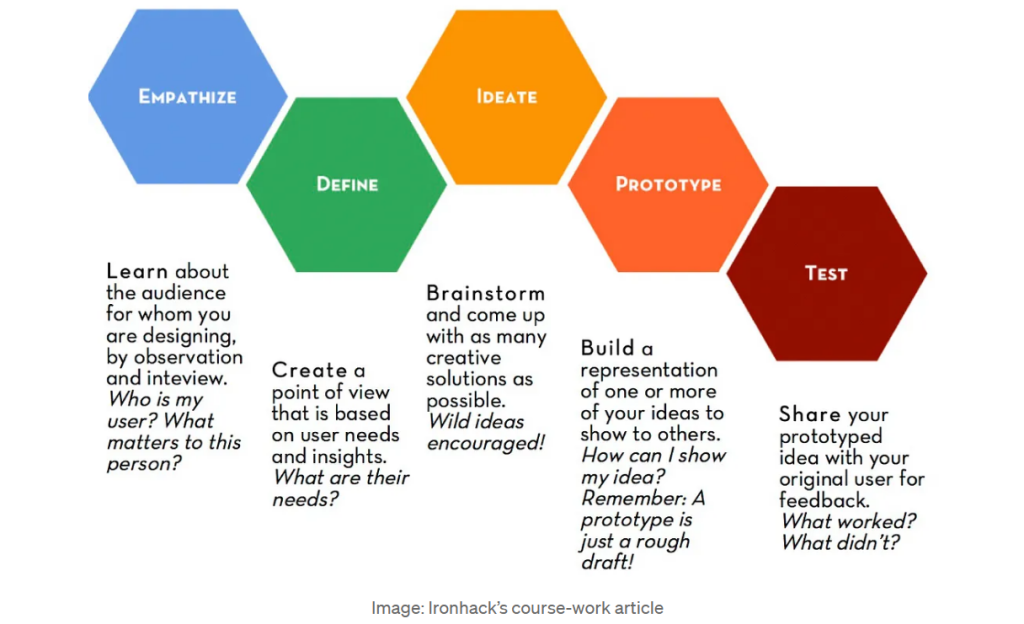
Fig. 3. Design-thinking. Source
Agile Thinking
Agile thinking is the ability to find effective solutions in uncertain situations. It is a mindset that values responding to change over following a fixed plan, emphasizes communication and collaboration, focuses on delivering small, usable pieces of work quickly, and supports continuous improvement.
Agile thinking methodologies are rooted in the Agile Manifesto, originally created for software development, but now widely applied across various industries. Some of the most common agile methodologies include:
- Scrum – A framework that organizes work into small, time-boxed iterations called sprints. scrumguides.org
- Lean – A methodology focused on maximizing value while minimizing waste. planview.com/resources/guide/lean-principles-101
- Kanban – a methodology that is focused on visualizing work, limiting work in progress and improving flow. businessmap.io/kanban-resources/getting-started/what-is-kanban-board
- Extreme Programming (XP) – a method emphasizing technical excellence, including practices like pair programming and continuous integration. agilealliance.org/glossary/xp
- Social Innovation
Social innovation is an approach focused on developing new solutions to social challenges—like poverty, inequality, education or climate change, and improving people’ s lives. It is centered on communities’ real needs, involves multiple stakeholders, aims to transform systems, and incorporates sustainable goals like long-term social and environmental benefits.