Alberi di Maggio is a cultural association aimed at ethnomusicology research about oral traditions in the inland border areas between the Marche, Abruzzo, and Lazio (Italy), where these regions intersect and share cultural commonalities. The association focuses on traditional construction techniques and dances, and promotes local performance festivals. They also created a community festival for local people’s engagement. Massimiliano, one of the founders, is a teacher of the conservatory of Pescara, and he involves his students in field research methodologies on the territories explored by the association. The association has a web platform with a database of oral performances, local music, dances and festivals, communicated through different types of storytelling: videos and recording of local players shown in an interactive map.
1.2. Information about the initiative
Contact person: Massimiliano di Carlo
Position: President of the association
Number of people involved: Small team
Profile of people involved: volunteers, researchers, community members
Qualification/training of people involved: traditional knowledge, low technical expertise, academics/ researchers
Massimiliano di Carlo, founder of the association, is a musician and traditional music teacher at the Luisa D’Annunzio Conservatory in Pescara, Italy. He specialises in vocal research and the repertoires of music and oral tradition. His students collaborate in ethnomusicology research through a module focused on field research methodologies, engaging actively in both archival and field studies.
Massimiliano’s ethnomusicology research spans the border areas of Marche, Abruzzo, and Lazio, regions that share cultural commonalities. His passion for this field began in Berlin, influenced by ethnomusicologists and traditional music performers like Tran Quang Hai and Amelia Cuni. With a background in classical music, Massimiliano transitioned from being an orchestra musician and soloist to embracing ethnomusicology and incorporating these experiences into his artistic activities.
The association’s other founding members include local individuals such as Mirko Guerrieri, a craftsman, and Maria Dubis Herrera, a retired Venezuelan employee. The diverse membership also includes a writer, a former dancer, and a conservatory student interested in traditional music.
Over the years, the association has collected oral testimonials about traditional music, performances, songs, and dances, creating an online database. They have also organised community festivals celebrating local heritage, including oral traditions, dances, and traditional knowledge about herbs and bio-construction techniques.
1.3. Training
Alberi di Maggio organises various one-day workshops, including traditional dances, bio-building, traditional voice use, and wild herb recognition. These courses are primarily aimed at local people, both young and adults. The workshops are taught by elderly experts with the participation of scientific collaborators. For example, the wild herb recognition workshop, conducted for two consecutive years, was led by local elders and ethno-botanists. Traditional dances and musical instruments like the bagpipe, tambourine, and accordion were taught by local experts.
The initiative also involves the foreign community residing in the area, creating an intercultural experience. Massimiliano highlights that participants come from diverse cultural backgrounds, including African and Albanian cultures. For instance, Albanian folk singers (Kosovar) living in Teramo held a concert with a local folk singer. In bio-construction, participatory worksites were used to restore local houses, employing both local and external techniques. These included Roman and Italic methods, as well as Moroccan Tadelakt, demonstrating strong Mediterranean analogies.
Massimiliano emphasises the need for training local people, especially the youth, to appreciate the richness of their intangible heritage. He advocates for long-term, officially recognised training within institutional contexts to ensure the cultural heritage’s social, political, economic, and professional dignity. Without this, the heritage risks remaining marginalised.
He criticises the official economy and mass culture for trivialising local traditions through commercial events, which he believes undermines the complexity of these cultural practices. Massimiliano suggests that prolonged training, such as collaborations with conservatory students, would allow individuals to deeply understand and disseminate this cultural heritage across different age groups and educational institutions, thereby preserving its value and significance.
Section 2. Description of the ICH involved
ICH Type:
Social practices, rituals and festive events
Oral traditions and expressions
ICH Recognition:
In danger of disappearing
Locally recognized
Well-known
Community involvement in the identification and management of the ICH:
Low
Medium
High
The ethnomusicology research explored various types of Intangible Cultural Heritage (ICH) as categorised by UNESCO. Firstly, it examined oral traditions and expressions, including different types of songs used to accompany work, devotional rituals connected to various dances, funeral lament songs, birth songs, lullabies, and narrative songs. Secondly, it investigated performing arts, such as playing traditional instruments like the bagpipe and accordion, and social practices, rituals, and festive events, all of which are linked to social gatherings. Additionally, the research considered traditional craftsmanship, such as bio-construction techniques. Lastly, it addressed knowledge and practices concerning nature and the universe, exemplified by an event organised to disseminate knowledge about wild herbs. Despite the rich diversity of these traditions, this ICH is not nationally recognized.
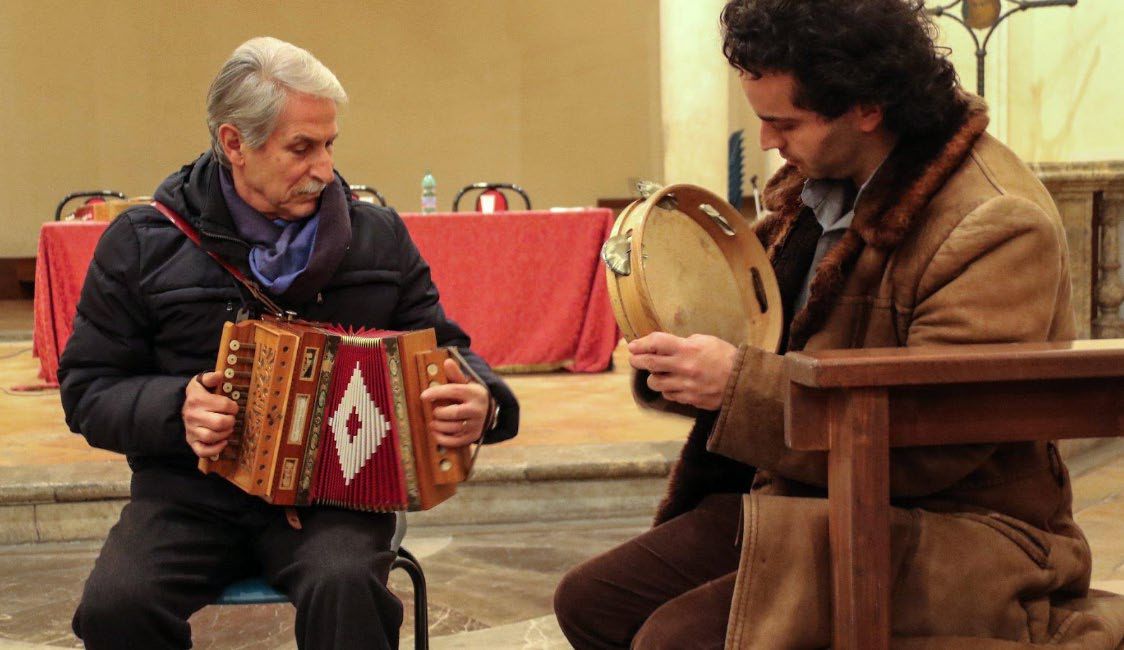
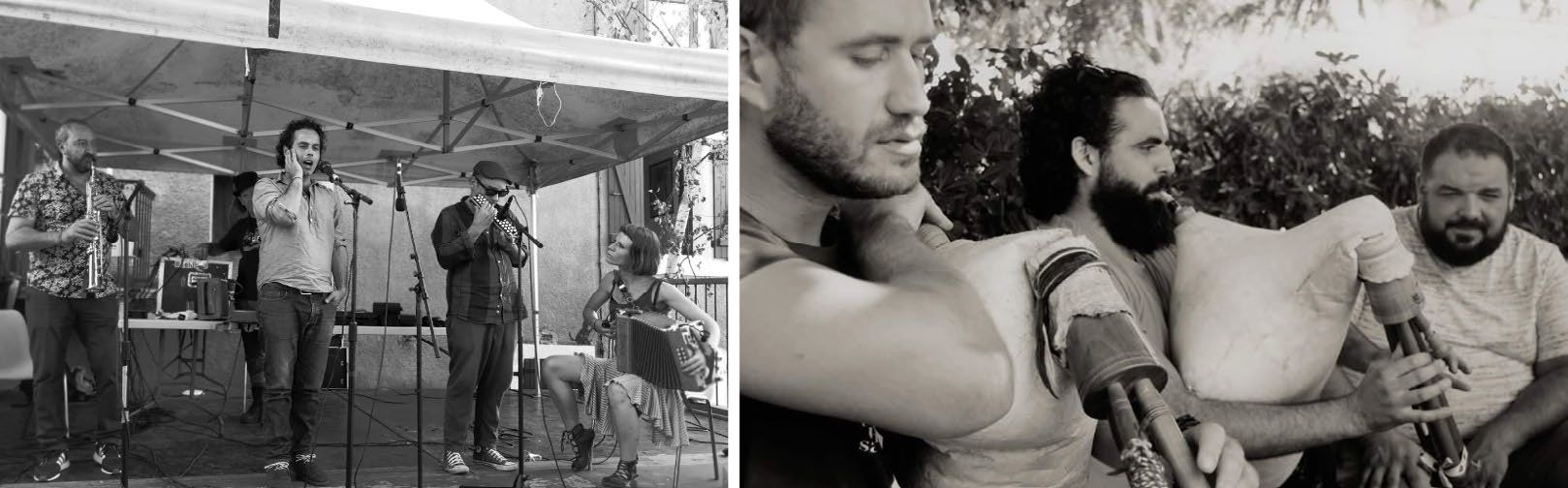
Massimiliano and a local performer playing typical music. Source: Alberi di Maggio.
Regarding the recognition of this heritage, attitudes vary among local people. The elderly and those actively involved are enthusiastic and engage with it spontaneously. However, they lack a supportive context for their activities, and this heritage is sometimes considered almost vulgar, especially by younger generations, despite its connection to the refined styles of mediaeval and Renaissance poetry, with their profound codes. The phenomenon of young people migrating from the south to the north for political and economic reasons has resulted in a decline in the ability to perform these traditions like the original practitioners. Nevertheless, there is a growing interest among the youth in these traditions, leading them to enrol in conservatories and participate actively. Alberi di Maggio aims to involve young people in safeguarding and promoting this heritage, emphasising the importance of long-term education and official recognition to prevent its folklorisation.
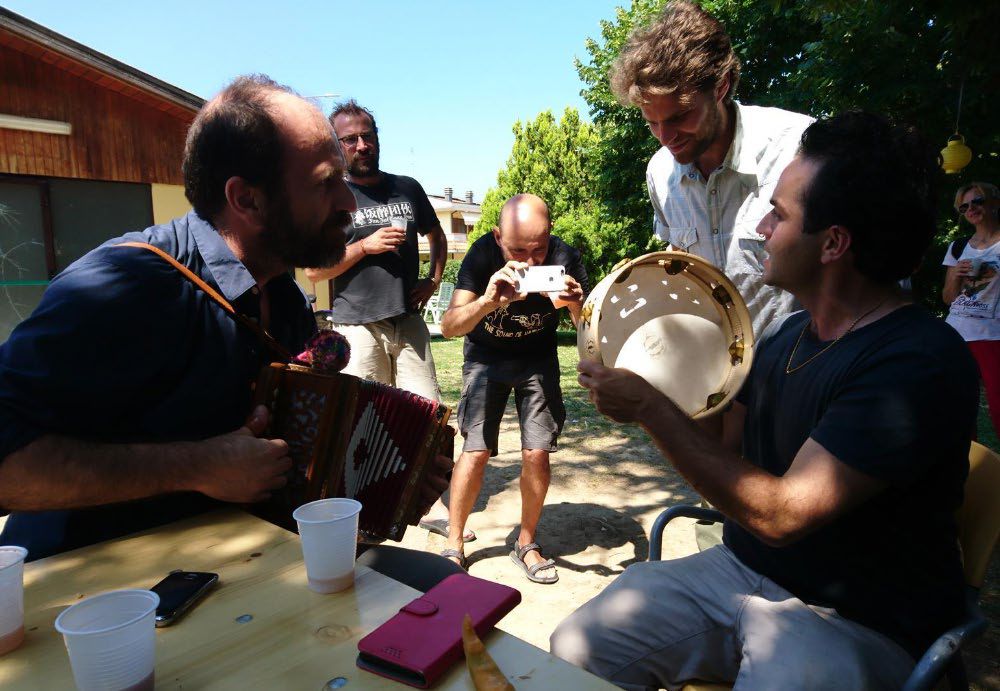
Alberi di Maggio members with local performers. Source: Alberi di Maggio
In the past, Massimiliano evaluates that Intangible Cultural Heritage was passed directly from generation to generation, and sometimes even internationally, such as melismatic songs, which have roots in Arab-Andalusian singing. However, he considers that this practice has become rare today, and official recognition is needed to give it value. He believes that it is important for people to stop viewing these traditions as outdated and useless, conforming to media stereotypes, and instead appreciate the depth of this culture, which risks being constantly marginalised by official narratives.
Section 3. Narrative creation and
adaptation to digital communication format
Process of content creation
How is it communicated
in a digital format?
Audiovisual, mapping
Website, video/audio platform (Youtube)
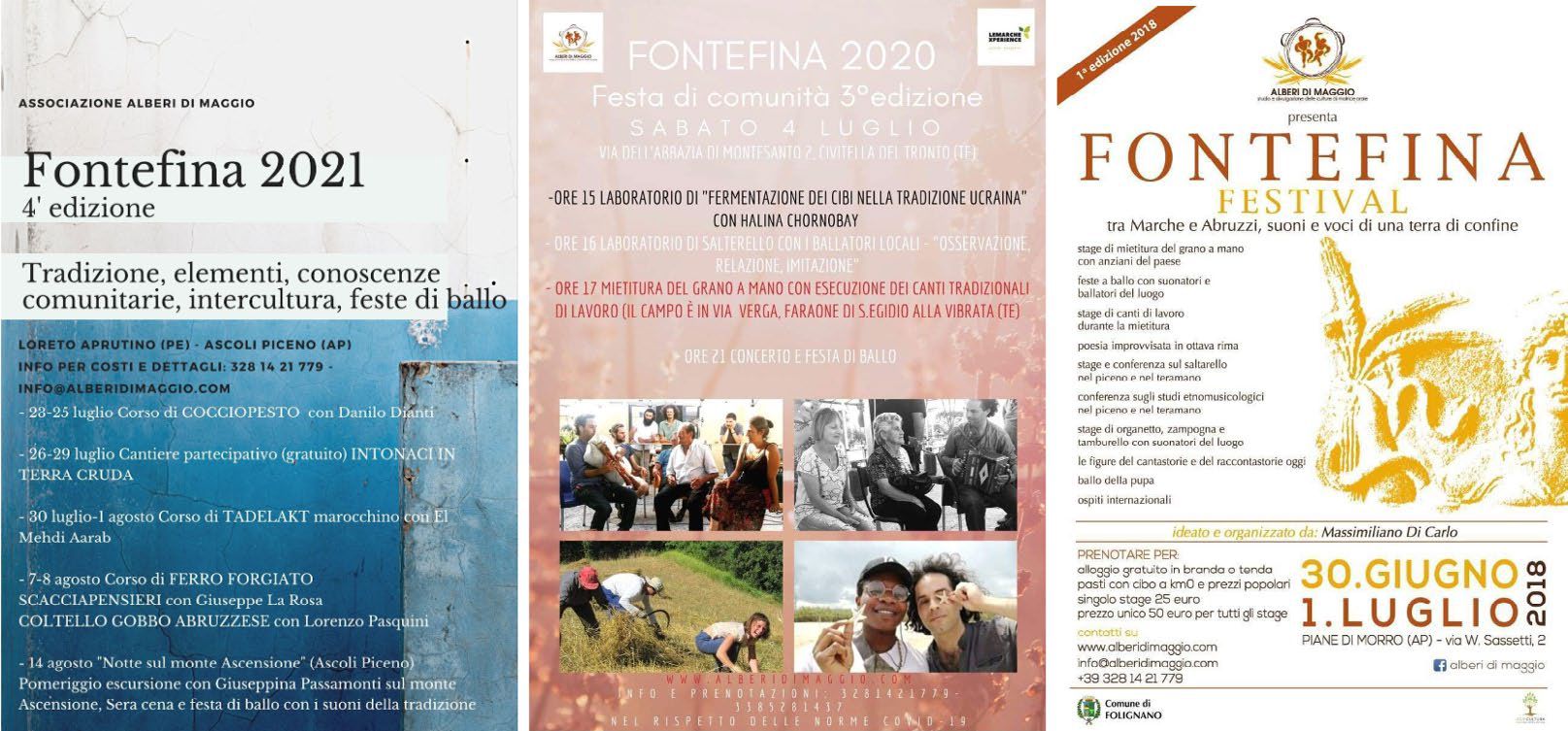
Fontefina festival flyers. Source: Alberi di Maggio Association.
The content creation process was grassroots, with Massimiliano selffinancing his research. The storytelling approach aimed to narrate existing stories, particularly music performances. The recording instruments included a Zoom H6 recorder, a Nikon D300 for videos, and mobile phones for spontaneous meetings. All the material was then uploaded to a computer for editing.
Due to a lack of staff, there is no monitoring of web page views (created by Simone Cursi) or a social media campaign for dissemination. During the COVID-19 pandemic, activities ceased as visits to elderly individuals were not possible due to their vulnerability.
There is no special narrative technique or script for video creation, as no professional storytelling is involved. However, some videos follow a structure. For example, in the video about the “calascione” instrument creator, there is an introduction of the testimonial followed by a description of the instrument.
Regarding the subjects of the videos, Massimiliano often assumed multiple roles, including producer, researcher, player, and occasionally co-protagonist. This was because he is also a musician eager to learn, and performers sometimes required an accompanist. He played a significant role in the production and dissemination of heritage, which was also promoted during local festivals.
3.1. Local Population
Even though local people are actively involved in the storytelling process, they are not part of the decision-making process. For them, singing and playing are spontaneous celebrations, and they were asked to be recorded to create digital content and safeguard the heritage. The local population does not fully grasp the importance of documentation, as these traditions are a normal part of their lives.
Massimiliano has made efforts to share the recorded content with the community by creating CDs and videos, which are distributed to the families of the performers. However, there is a generational gap, as the children of the elderly participants often reject this form of expression. They feel ashamed or incapable of replicating the expressive power and theatricality of their elders.
Massimiliano highlights the impressive stage presence of these local performers, noting that they can handle performances better than professional artists. This underlines the need for official recognition and structured dissemination efforts.
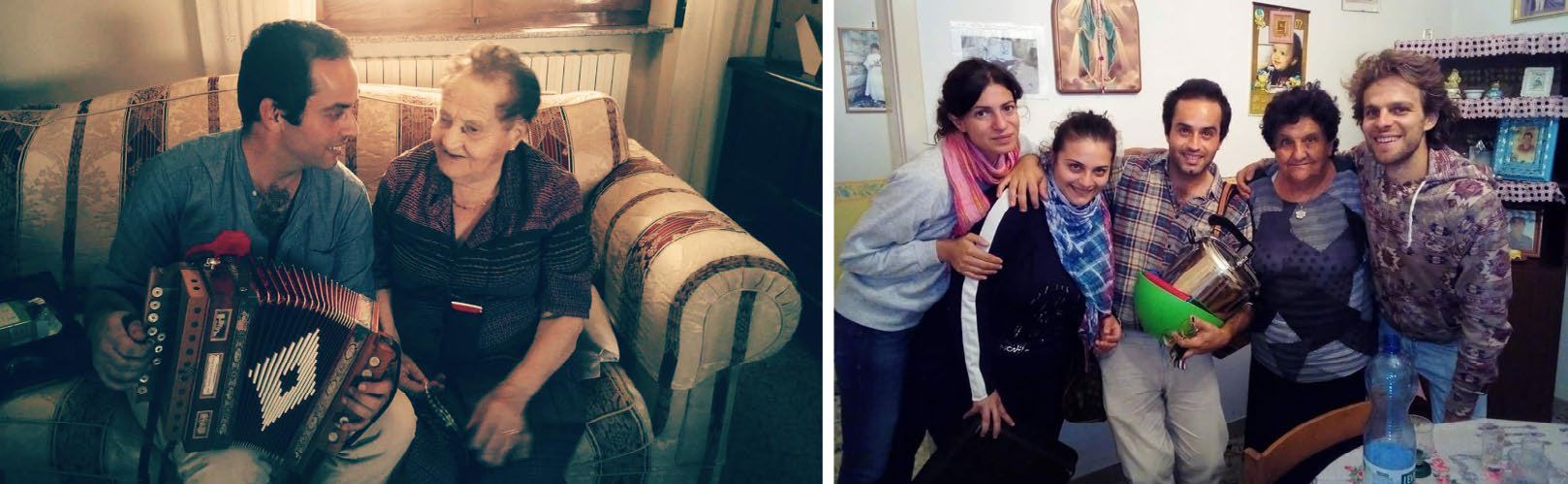
Members of the association with local people. Source: Alberi di MaggioPerformance during local festivals. Source: Alberi di Maggio
The ICH has been promoted within local festivals, with one, Fontefina, specifically created to foster community cohesion and provide a platform for these spontaneous expressions. Massimiliano advocates for official dissemination channels to train new singers and create a conscious generation that can sustain and revitalise these traditions. This approach aims to bring the heritage back to the festivals, ensuring its continuity and relevance.
Section 4. Audience and methodologies
Target audience: local community, students
Reach:
Low
Medium
High
Aim of sharing the stories:
Preserve traditions
Social cohesion
Frequency: Permanent activity
Alberi di Maggio utilises a website to disseminate Intangible Cultural Heritage (ICH), featuring videos and recordings of oral performances and festivals, linked to a YouTube channel and a Facebook page. The primary aim of this research into local oral traditions is to collect video and audio testimonials that safeguard and promote this heritage, raising awareness among young local people.
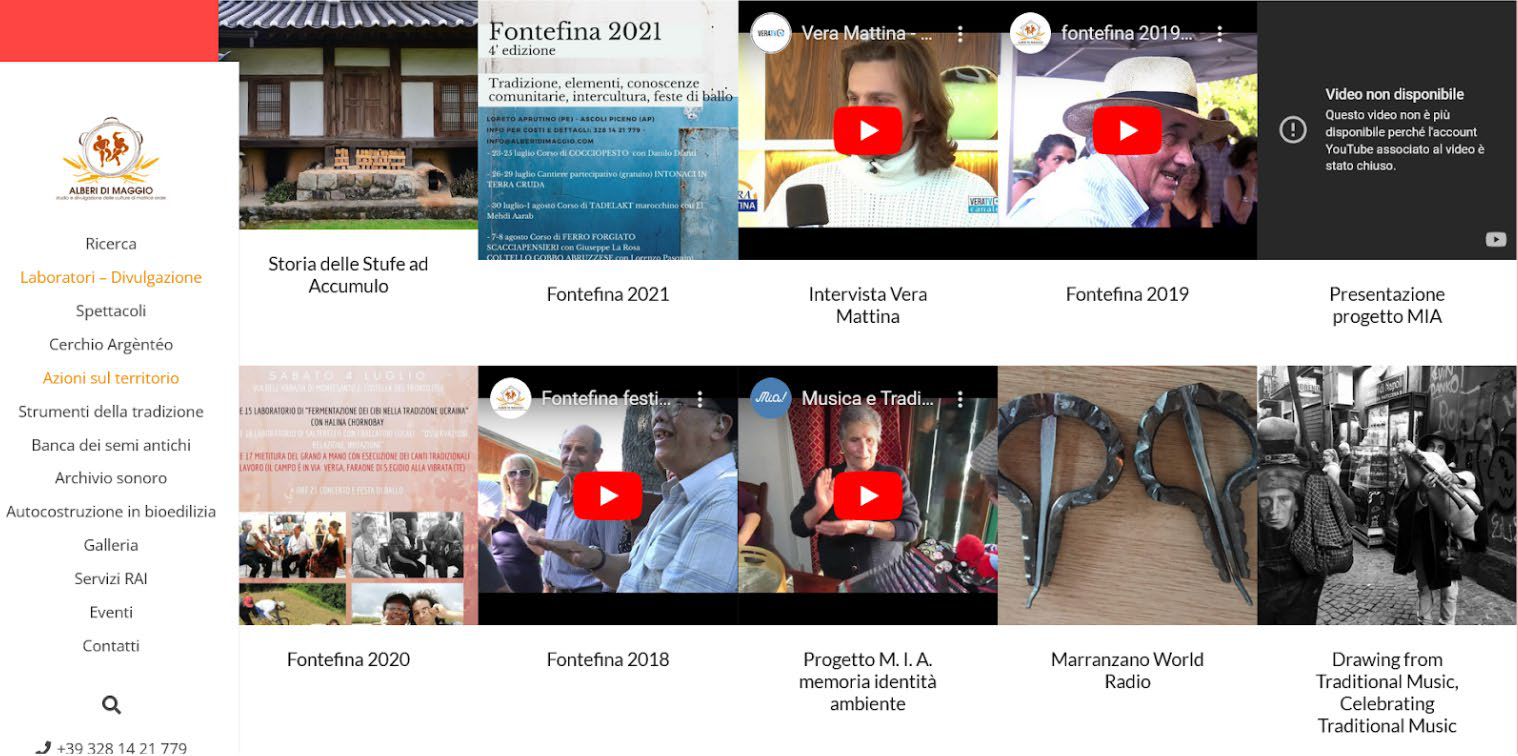
Alberi di Maggio webpage
Since 2018, the association has organised a community festival called Fontefina. This festival includes various workshops conducted by elderly people, sharing their local knowledge. Alberi di Maggio is also committed to preserving traditional festivities, such as the May Feast in Marino del Tronto, where a tree is ceremoniously moved to music and singing, and the Ox Feast in Loreto Aprutino, where an ox is hypnotised by music. These festivals are documented through photos and videos, which are then shared on the web platform. The principal audience of the project is the local community, with a particular focus on raising awareness among young people about the importance of ICH. Conservatory students are also a key target audience.
The methodologies for disseminating this heritage involve creating and maintaining an accessible digital archive of videos, photos, and recordings. By using popular platforms like YouTube and Facebook, the project ensures broad accessibility and engagement. The combination of digital dissemination and community events fosters a connection between the local traditions and the younger generation, encouraging their participation and appreciation of their cultural heritage.
Section 5. Innovative aspects
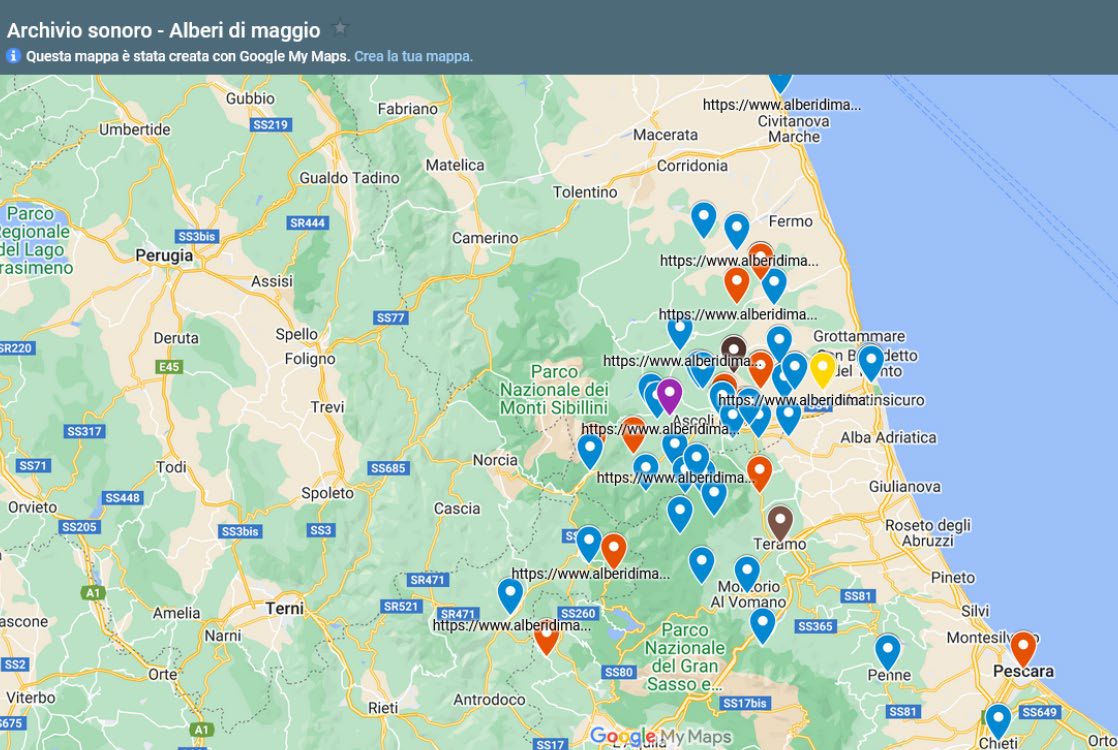
The most innovative aspect of the initiative is the interactive map on the website, designed by an IT specialist to enhance user experience. Massimiliano explained, “Users can easily locate areas of interest by clicking on a drop icon, similar to Google Maps. Each drop represents a town, and within it, there may be one or several documented individuals.”
The recordings are categorised on an anthropological basis without specific titles, as they traditionally do not have any. Massimiliano elaborated, “The categories include terms like ‘harvest song’, ‘lullaby’, ‘tale of an experience related to singing’, ‘telling of the traditional mythological story X’, ‘played for dancing’, ‘singing with tambourine’, and ‘singing with bagpipe’. These nomenclatures are consistent with those used in the Rai archive or any ethnographic cataloguing system.”
The sound archive. Source: Alberi di Maggio web page.
Section 6. Impact
Impact on tourism:
Low
Medium
High
Impact on local sustainable development:
SDG3. Good health and well-being
SDG4. Quality education
SDG11. Sustainable cities and communities
The initiative has significantly raised awareness about this Intangible Cultural Heritage (ICH), particularly among young people. It is not intended to promote tourism, but it could encourage conscious tourism. Massimiliano noted that mass tourism can have destructive effects, as seen with the folklorisation of local traditions in some central Italian regions.
Massimiliano believes that the first step in promoting these rural areas is the institutional recognition of these artistic forms. This recognition can elevate their status, preventing them from being considered inferior. He also emphasises the importance of field research in maintaining the meaning of intangible heritage.
The project is entirely based on sustainability, with all instruments being selfproduced from natural materials. According to Massimiliano, the most important impact is the joy it brings. He explains, “Modern joy often depends on entertainment, which is a costly industry. For example, a village fair can cost 30,000 euros, whereas a spontaneous gathering where people play music costs nothing. The joy and the measurable degree of endorphins are certainly higher when the event is experienced naturally rather than from a stage.”
We use cookies to ensure that we give you the best user experience on our website. If you keep using this website we assume that you agree.