
Do you remember when the Internet appeared in our lives? What you do remember for sure is that since we used the internet, access to and consultation of information has become significantly faster and broader, while also overcoming various barriers, especially geographical ones, granting us access to a wide variety of communication channels across the globe. The evolution from the first stage of the internet, known as “Web 1.0,” to the second stage, “Web 2.0,” starting around 2004, is marked by the shift from users being passive consumers of information to becoming the main creators of most of the content published online (Cormode and Krishnamurthy, 2008).
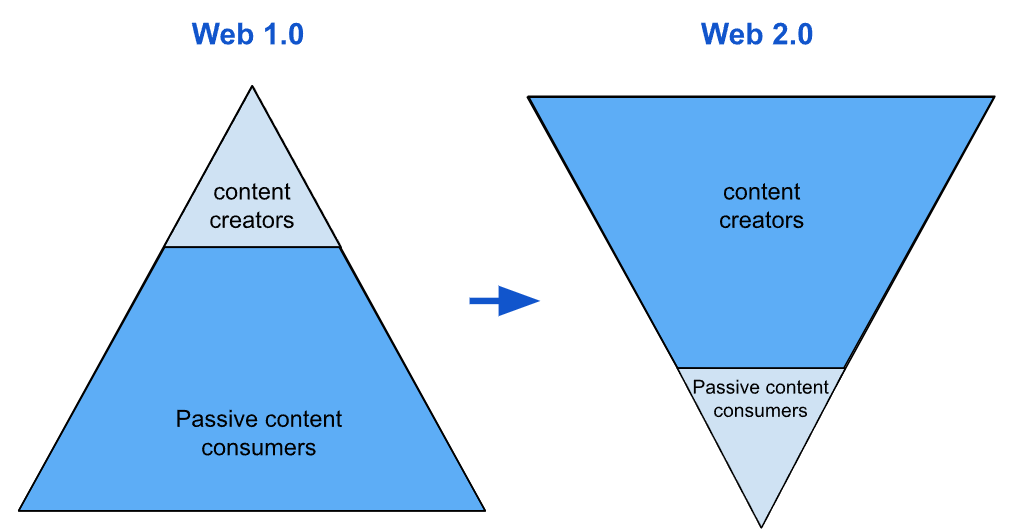
Imagine the impact this change has had on how we use the Internet today. On the bright side, voices online have multiplied, and sharing content has become so democratized that pretty much anyone can post something on the Internet nowadays. But on the other hand, these shifts have opened the door to fake news and widespread misinformation, and have caused user traffic to become concentrated on just 116 websites owned by for-profit digital technology companies, which absorb a third of all internet traffic (Javier, 2024).
In this environment of change and growing mistrust in information, how should we approach the internet? And how do we approach digital content creation and its localization?
In Module 5 of this training, we will address this question by focusing on the websites where we can host our digital narratives. To do so, we will explore the web to analyze different platform models that allow us to share content and information. This will help us envision our own design, that is, the creation of a platform where we ourselves can publish our stories, thereby empowering the Intangible Cultural Heritage of our territory. In addition, we will learn how to manage content and maintain the platform or user profile.